
Mold guide
Ceiling Mold From a Roof Leak: What to Do
Mold on a ceiling from a roof leak usually starts in the attic above, and by the time a brown ring or dark spots show up on a Gettysburg ceiling, the insulation and wood overhead have often been wet for a while.

By Curtis Bowman, Water and HVAC Restoration Lead
Published
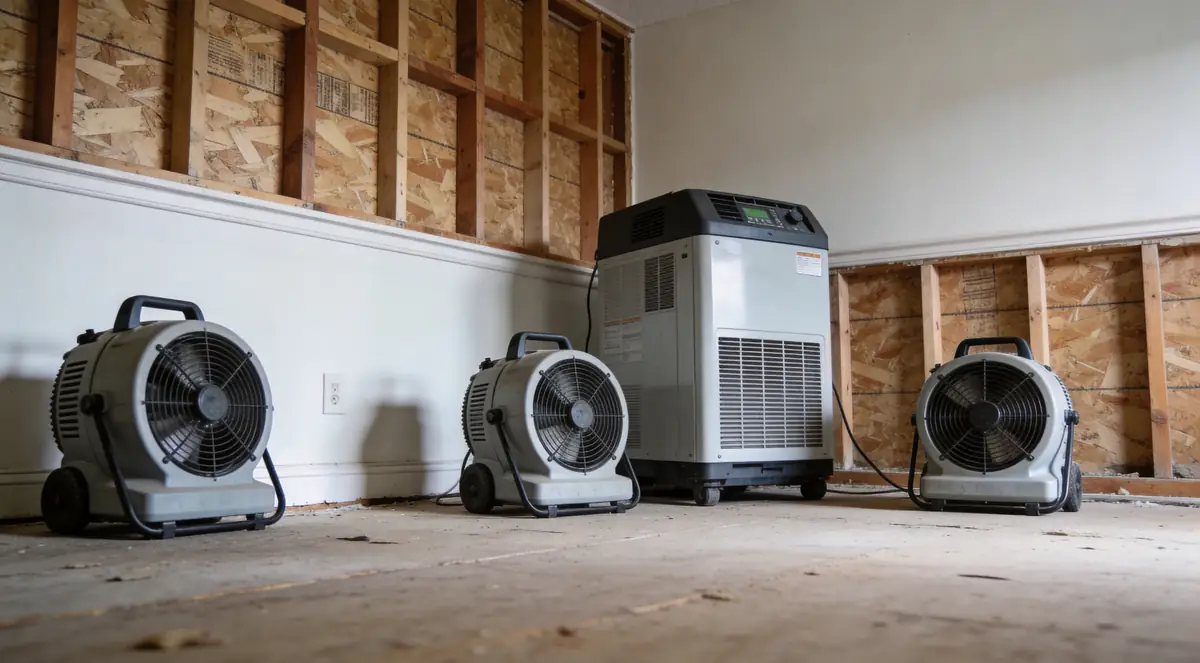
How a Roof Leak Becomes Ceiling Mold
Rain or snowmelt gets in through damaged shingles, failed flashing around a chimney or vent pipe, or ice dams at the eaves. The water soaks attic insulation, which holds it against the top of the ceiling drywall like a wet sponge. Drywall paper is a good food source for mold, and the EPA says growth can begin within 24 to 48 hours on wet materials.
Because the water sits above the ceiling, the room below may show nothing at first. A stain appears only after the drywall is saturated, and by then mold may already be growing on the back side.
Questions about one specific room are worth putting to our Gettysburg mold crew.
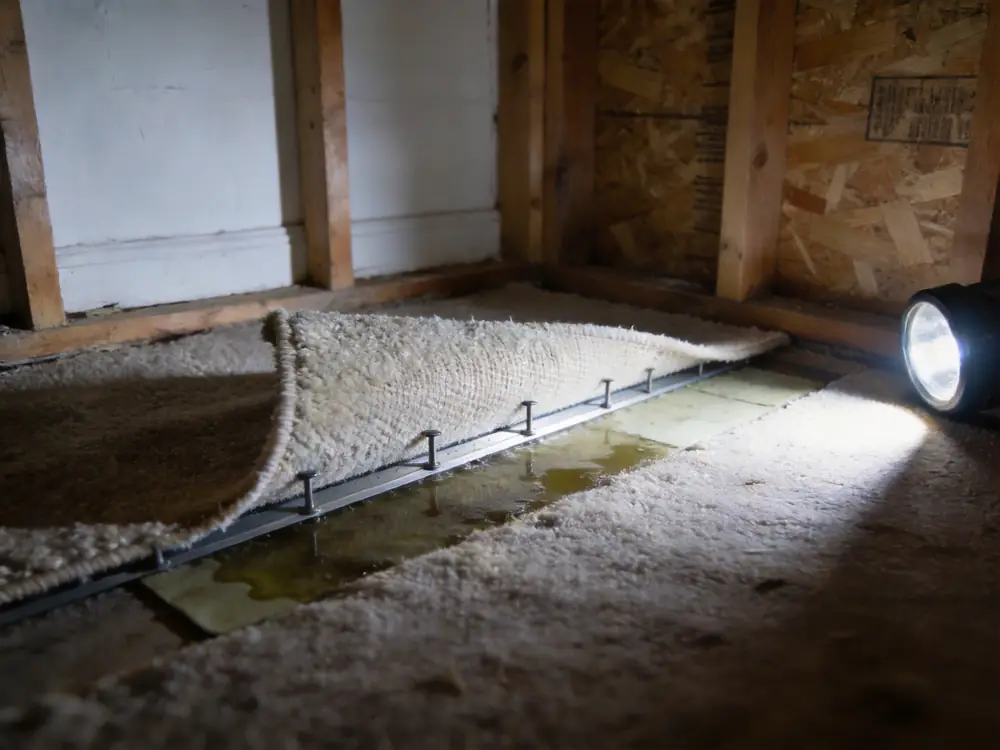
Signs of Ceiling Mold
- Brown, yellow or gray rings that grow after each rain.
- Dark spots or fuzzy patches, often clustered in the stain.
- Sagging or soft drywall.
- Peeling or bubbling paint on the ceiling.
- A musty smell in upstairs rooms or closets.
- Stains near exterior walls in winter, which can point to ice dams.
Not every ceiling stain is a roof leak. Stains under a bathroom usually come from a tub, toilet or shower leak. Dark spots spread evenly over a cold ceiling can come from condensation when an attic is poorly insulated or ventilated.
Step by Step: What to Do
- Protect the room. Put a bucket under active drips and move furniture. If the ceiling bulges, drain it through a small hole at the lowest point.
- Get the roof repaired. A roofer should fix the shingles, flashing or vent boot. Tarping may be needed until repairs can be made.
- Inspect the attic. With a flashlight, look for wet insulation, dark staining on sheathing and rafters, and mold. Walk only on joists.
- Remove wet insulation. Wet fiberglass and cellulose lose their insulating value and hold water against the ceiling.
- Measure moisture. Check the drywall and framing with a moisture meter.
- Remove moldy drywall. Cut out affected ceiling drywall with a margin past the stain. Use plastic sheeting and protective gear.
- Clean and dry framing. HEPA vacuum and clean joists and sheathing, then dry until readings are normal.
- Rebuild. Only close up the ceiling and add new insulation once everything is dry.
Take photos of the stain, the attic and the roof damage before repairs start. Insurers often ask whether damage was sudden or long term.
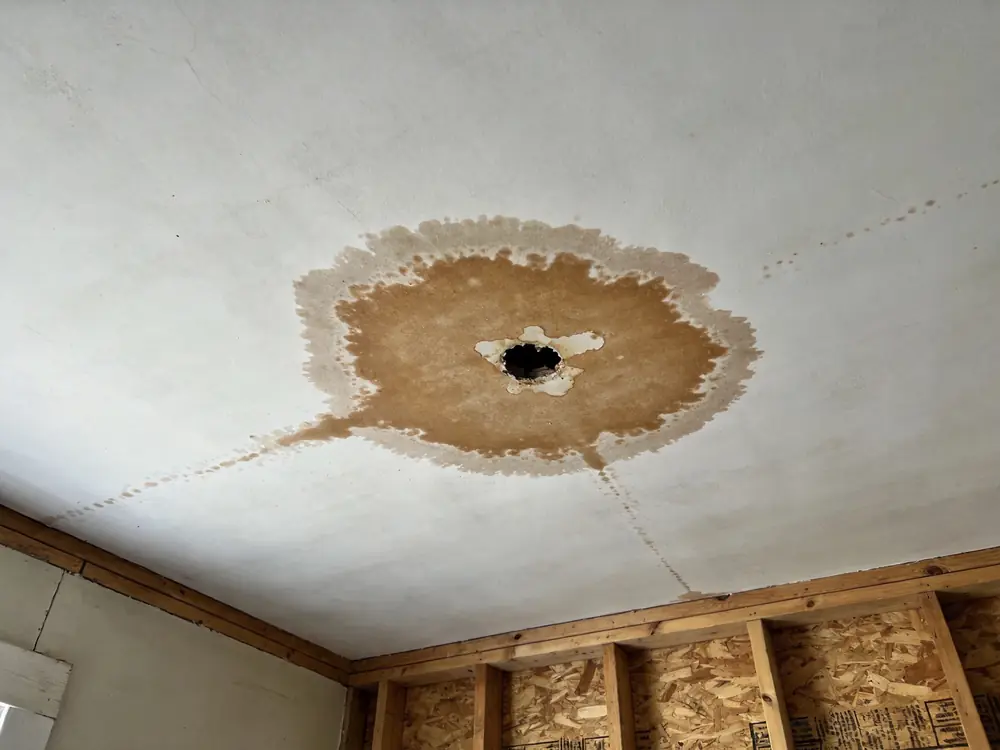
Can You Just Paint Over a Ceiling Stain?
Only if the leak is fixed, the drywall is firm, readings show it is dry and there is no mold. Stain-blocking primer covers the mark, but it does nothing for mold behind the drywall or in wet insulation above. Painting over an active problem lets it keep growing out of sight.
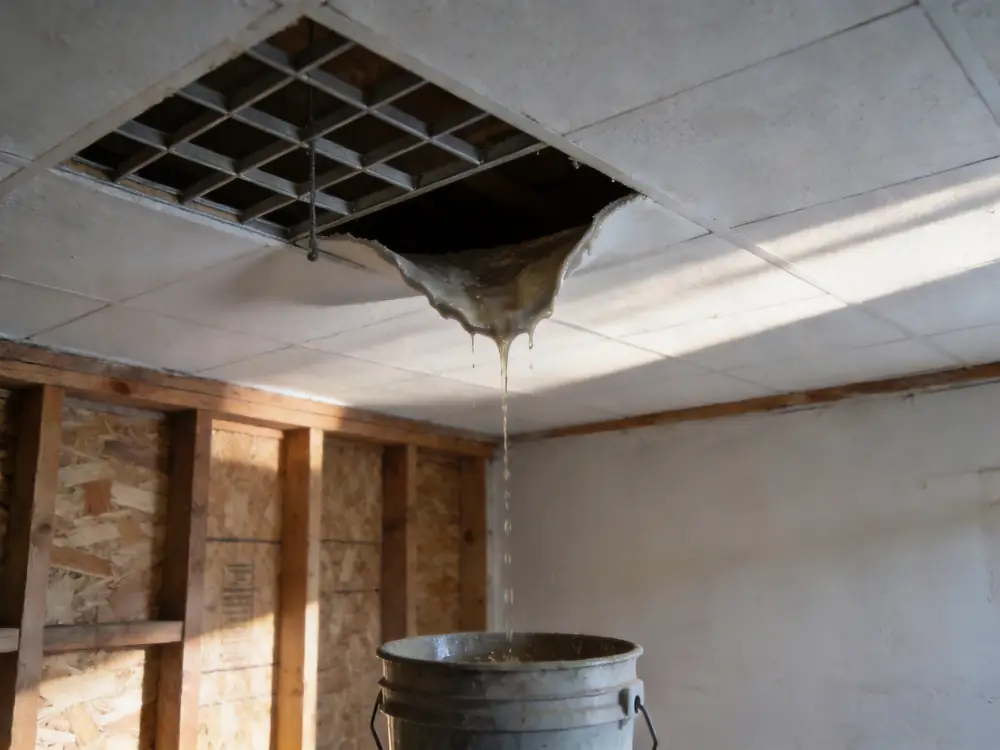
Drying vs. Remediation
| Situation | Usual approach |
|---|---|
| Fresh leak, found within a day or two, no mold | Fix roof, remove wet insulation, dry drywall and framing in place. |
| Stain with firm drywall, dry readings, no growth | Fix roof, prime and paint. |
| Soft or sagging drywall | Remove and replace the damaged section. |
| Visible mold on ceiling or attic wood | Containment, HEPA filtration, removal and cleaning. |
The line between drying and remediation is important. Our article on water damage restoration vs. mold remediation explains when you need one, the other or both.
Roof Leaks in Gettysburg
Gettysburg gets about 43 inches of precipitation a year, plus late-summer storms and winter freeze-thaw cycles that can form ice dams on older roofs. Many homes near downtown have complex rooflines with chimneys, dormers and valleys where flashing ages. Older attics often have little ventilation, and bathroom fans vented into the attic add moisture. If your home is in the historic district, roof material changes may need review by the Historic Architectural Review Board, so check with the borough at gettysburgpa.gov before replacing visible roofing.
When to Call a Professional
Call if the moldy ceiling area is larger than about 10 square feet, if mold is in the attic (see our attic mold remediation service), if the leak went on for weeks, or if anyone in the home has asthma or a weakened immune system. Talk with your doctor about any health concerns. Our water damage and mold restoration team in Gettysburg is open 24 hours at (717) 420-8919. The EPA's mold page has more background.
If you are working through this from the beginning, see How Fast Does Mold Grow After Water Damage?.