
Attic Mold Remediation in Gettysburg, PA
Attic mold remediation in Gettysburg, PA starts with one question: where is the moisture coming from? We remove mold from roof sheathing, rafters and trusses, fix the ventilation or venting problem that fed it, and treat the wood so the attic stays dry and clean. We're open 24 hours at (717) 420-8919.
Open 24 hours · Free, no-obligation estimate
Get a Free Mold Estimate
Answered 24/7. No obligation.
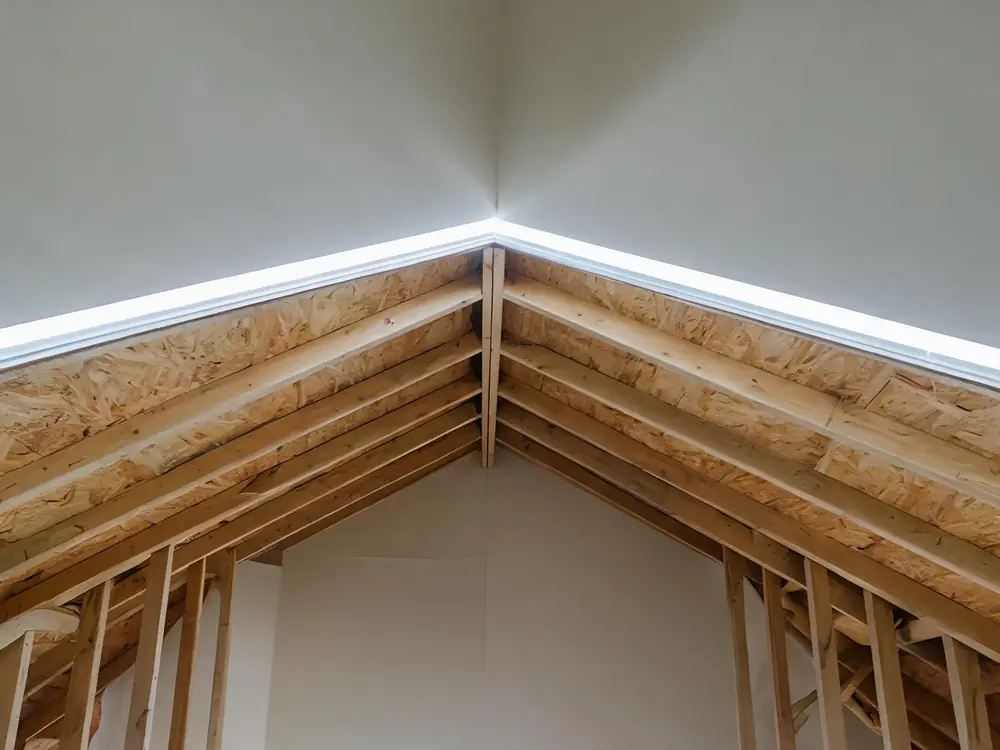
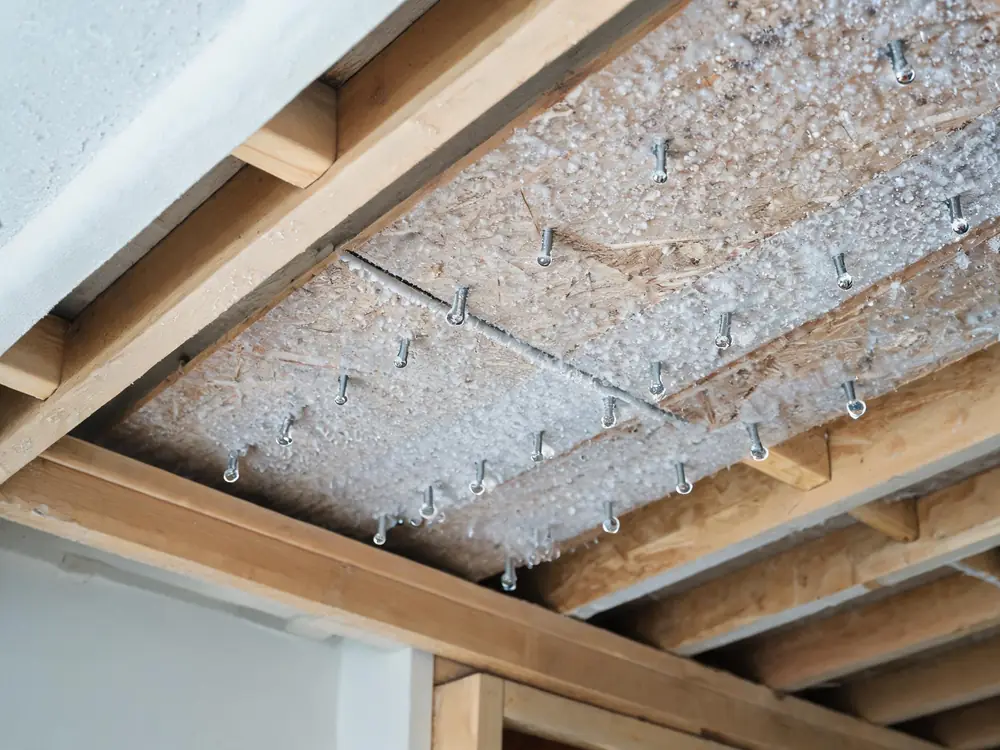
Most attic mold in Gettysburg homes is not caused by a roof leak. It grows slowly over several winters as warm, damp household air rises into a cold attic and condenses on the underside of the roof deck. By the time anyone spots it, it often covers much of the north slope. Our job is to clean it properly and stop the cycle, as part of our professional mold remediation in Gettysburg.
What Our Attic Mold Remediation Includes
An attic job is more than spraying the wood. A complete attic mold remediation covers the moisture source, the mold itself and the conditions that let it grow. Here is what a typical project includes:
- Moisture and ventilation assessment: we check soffit intake, ridge and gable exhaust, bath fan and dryer ducts, insulation depth and air leaks from the living space below.
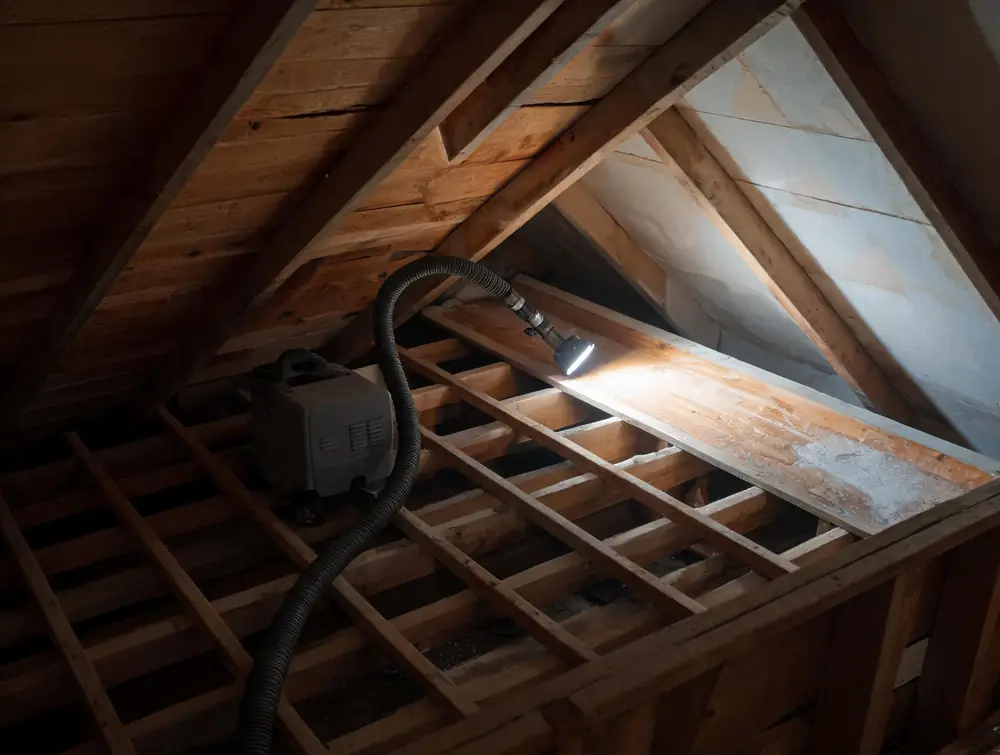
- Containment and protection: we seal the attic hatch or pull-down stairs, protect the path through your home and set up HEPA air filtration and negative air pressure so spores don't drift into bedrooms below.
- Mold removal: HEPA vacuuming, then wire brushing, sanding, or dry ice or soda blasting depending on the size of the attic and how heavy the growth is.
- Insulation handling: removal and disposal of contaminated or wet insulation when needed, and replacement after the work is done.
- Treatment and sealing: an antimicrobial application and, where it makes sense, a clear or white mold-resistant coating on cleaned wood.
- Correcting the cause: rerouting bath fans outside, clearing blocked soffits, adding baffles, and air sealing the attic floor.
- Verification: a final visual check and moisture readings, and we recommend independent clearance testing when the job is large or someone in the home is sensitive to mold.
We follow the IICRC S520 standard for professional mold remediation, which stresses finding and fixing moisture first and physically removing mold rather than only killing it. If we find a basement moisture problem driving humid air upward, we'll tell you, and our basement and crawl space mold remediation service can handle it in the same visit. If your air handler or ducts run through the attic, ask about HVAC and air duct mold remediation too, since attic air can be pulled into the system.
Signs You Need Attic Mold Remediation
Attics are out of sight, so mold often goes unnoticed for years. Watch for these signs:
- Black, gray or dark green staining on the underside of the roof sheathing, often heaviest near the eaves or on the north slope.
- White, fuzzy growth on rafters and trusses.
- Frost or rust on nail tips poking through the roof deck.
- A musty smell at the attic hatch or in upstairs closets.
- Damp or matted insulation, or insulation with dark streaks where air leaks through it.
- A bath fan duct that ends in the attic instead of at a roof or wall cap.
- A home inspection report that flags "microbial growth" on the roof deck.
If you want to understand the root causes in more depth, read our guide on what causes attic mold. If you aren't sure whether the staining is mold at all, our mold inspection and testing service can confirm it.
Our Attic Mold Remediation Process
- Inspection and moisture mapping. We inspect the attic, measure wood moisture content, check venting and look for air leaks around light fixtures, chimneys, plumbing stacks and the hatch.
- Written scope and estimate. You get a clear scope that separates mold removal from ventilation and insulation work, so you can see what each piece costs.
- Containment and air filtration. We seal the attic access, protect floors and stairways, and run HEPA air scrubbers to keep the attic under negative pressure while we work.
- Insulation removal, if needed. Wet, moldy or heavily contaminated insulation is vacuumed out with a HEPA-filtered system and bagged for disposal.
- Mold removal from wood. We HEPA vacuum loose spores, then remove growth by sanding, wire brushing or blasting. Badly damaged or delaminated sheathing is flagged for replacement.
- Antimicrobial and coating. We apply an antimicrobial to cleaned wood and, where appropriate, a mold-resistant sealer.
- Fix the cause. Bath fans get routed outdoors, soffits get cleared and baffled, and attic floor gaps get sealed. We coordinate a roofer if there's an active leak.
- Detail cleaning and final check. A second HEPA vacuum removes fine dust. We confirm the wood reads dry, do a visual inspection with you, and recommend independent clearance testing on larger jobs.
Attic Mold Removal Methods Compared
There is no single best method for every attic. The right choice depends on how much sheathing is affected, how tight the space is and your budget. Our article on dry ice blasting for attic mold goes deeper, but here is the short version:
| Method | Best for | Pros | Cons |
|---|---|---|---|
| HEPA vacuum, wire brush and sanding | Small to medium areas, light to moderate growth | Lower equipment cost, precise, works in tight spaces | Labor intensive and slow on large roof decks |
| Dry ice blasting | Large attics with heavy staining | Fast, no water, no leftover blast media, removes most staining | Higher equipment cost, loud, needs strong containment |
| Soda blasting | Large attics where some residue is acceptable | Fast, removes staining well | Leaves baking soda dust in insulation and framing that must be cleaned up |
| Antimicrobial and encapsulating coating | Light residual staining after cleaning | Seals surface, adds mold resistance, brightens wood | Not a substitute for removal; coating over active growth is not recommended |
| Sheathing replacement | Rotted, soft or delaminated plywood or OSB | Removes damaged material completely | Most expensive; usually done with a roof replacement |
For most roof decks we find in Gettysburg, the wood is stained but still solid. That means cleaning and treating the mold on attic sheathing is usually enough, and replacement is reserved for soft or delaminated panels.
What Affects the Price of Attic Mold Remediation
Every attic is different, so we price after an inspection. These are the main cost factors:
- Square footage of affected sheathing and whether one slope or the whole roof deck is involved.
- Access: a walk-up attic with flooring is far easier than a low-pitch attic entered through a closet hatch.
- Insulation: removing and replacing blown-in insulation can add significantly to the total.
- Method: blasting costs more per day but can finish faster on big attics.
- Corrective work: rerouting a bath fan, installing baffles or adding ridge vent.
As a general reference, small attic areas under 10 square feet can fall in the typical $500 to $1,500 range, while whole-attic projects in a full-size home often run several thousand dollars, and more when insulation is replaced. National figures put professional mold remediation at roughly $1,200 to $3,800 on average. For a full breakdown, see our guide to attic mold remediation cost. Final pricing always comes after we inspect the attic.
Attic Mold in Gettysburg Homes: The Local Picture
Gettysburg's housing stock makes attic mold common. Many homes in the Gettysburg Historic District date to the 1800s and have been added onto several times, so one roof may have three different framing styles and very little continuous ventilation. Older homes and post-war houses around town often have bathroom fans that were simply pointed into the attic when they were installed. Every shower then pushes warm, wet air straight onto the roof deck.
Our climate adds to it. Gettysburg gets about 43 inches of precipitation a year, summers in July and August are humid, and winters bring repeated freeze-thaw cycles. In January and February, that humid indoor air meets sheathing that is below its dew point, and water condenses on the wood night after night. Late-summer tropical storm remnants, like those that flooded the region during Agnes in 1972, Ivan in 2004 and Lee in 2011, can also drive rain through old flashing and aging roofs. The National Weather Service in State College tracks these conditions for central Pennsylvania.
If you live in the historic district, most attic work happens indoors and does not change the exterior. Adding new roof vents, though, can affect what the street sees, so check with the borough and the Gettysburg Historic Architectural Review Board (HARB) before changing exterior vents or roofing. The Borough of Gettysburg website has current contact information.
Keeping Attic Mold From Coming Back
The EPA is clear that the key to mold control is moisture control. In an attic, that means three things working together:
- Stop moisture from entering. Vent bath fans, kitchen hoods and dryers to the outdoors, never into the attic. Keep indoor humidity below 60 percent, and ideally between 30 and 50 percent, as the EPA recommends.
- Air seal the attic floor. Gaps around recessed lights, wiring holes, chimney chases and the attic hatch let warm, moist air rise. Sealing them does as much as adding vents.
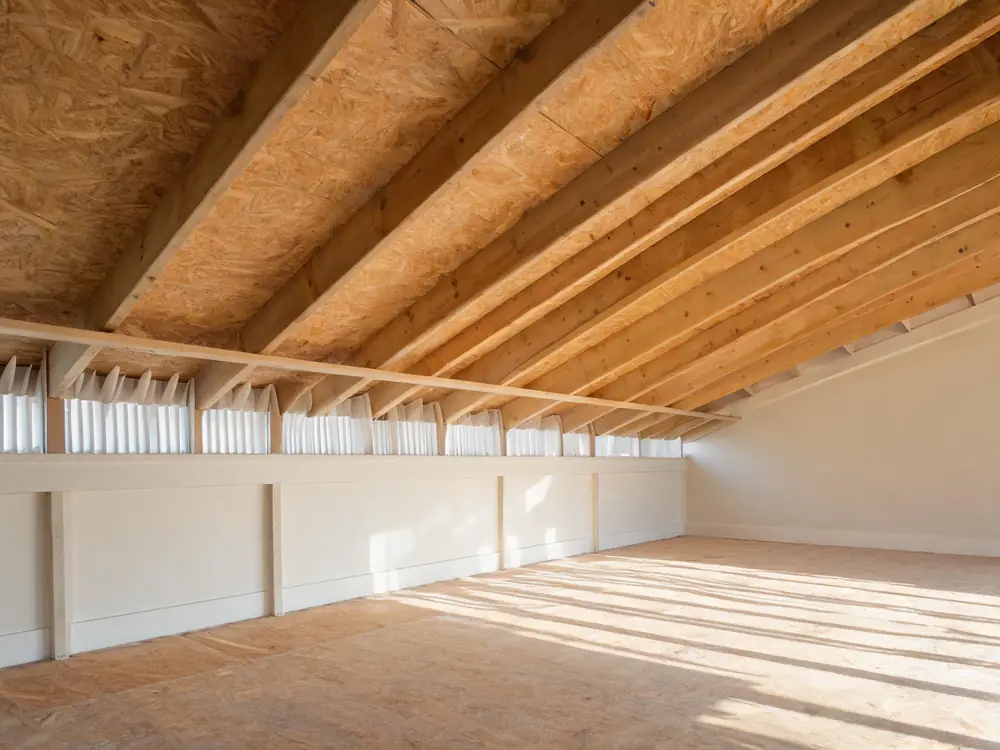
- Balance ventilation. Soffit intake and ridge or gable exhaust should be roughly balanced, and insulation should not block the soffits. Our guide to attic ventilation to prevent mold explains how to check yours.
Selling or buying a home? Attic mold is one of the most common findings on Gettysburg inspection reports. If that's why you're here, read what to do when there's attic mold found at home inspection, including how buyers and sellers usually handle repairs and documentation.
Why Gettysburg Homeowners Call Us for Attic Mold Remediation
We Fix the Cause, Not Just the Stain
Cleaning a roof deck without fixing ventilation is money spent twice. On every attic job we trace the moisture source, whether it is a bath fan dumping into the attic, blocked soffits, air leaks from the rooms below or a slow roof leak. Your written scope lists the corrective work next to the cleanup, so you can see exactly what will keep the mold from returning next winter and decide what you want done.
Containment That Protects the Rooms Below
Attic hatches usually sit in hallways, bedrooms and closets, right where your family lives. We seal the access point, lay protection along the work path and run HEPA air scrubbers that keep the attic under negative pressure. That way spores and fine dust from sanding or blasting are captured instead of drifting down into living space. We follow the IICRC S520 standard for containment and removal on every job.
Open 24 Hours and Based Downtown
Our office is at 15-23 Baltimore St in Gettysburg, and we answer the phone 24 hours a day. That matters when a home inspection deadline is days away or a storm has pushed water through the roof. We give you a clear written estimate after inspection, explain the method we recommend and why, and suggest independent clearance testing when the size of the job or health concerns call for it.
Schedule Attic Mold Remediation in Gettysburg
If you've seen dark staining on your roof deck, smelled mustiness at the attic hatch or received an inspection report that mentions attic mold, don't wait for it to spread across the rest of the sheathing. Call us at (717) 420-8919, any hour of the day, or use the form on this page. We'll inspect the attic, show you what we find and give you a written plan to clean it and keep it dry.
Before and after
Attic Mold Remediation in Gettysburg: Before and After
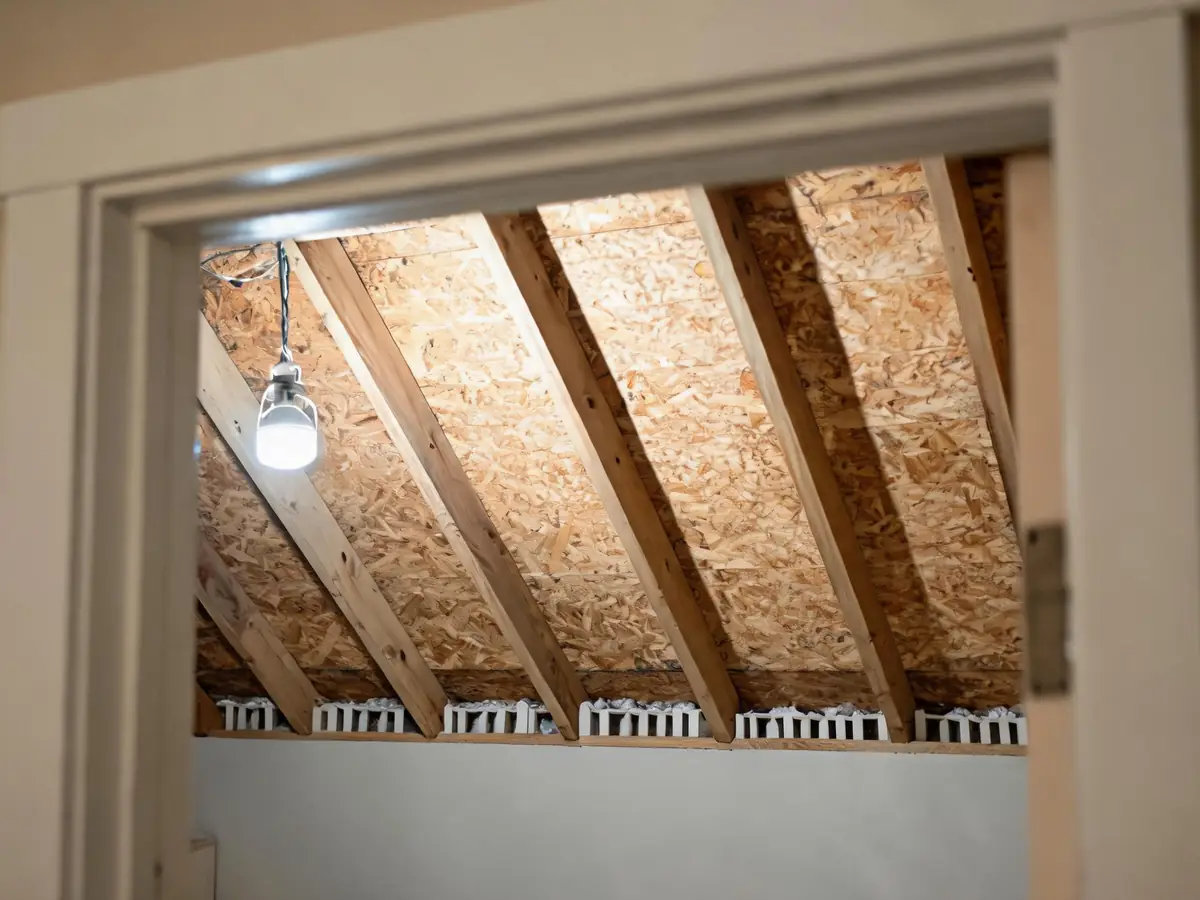
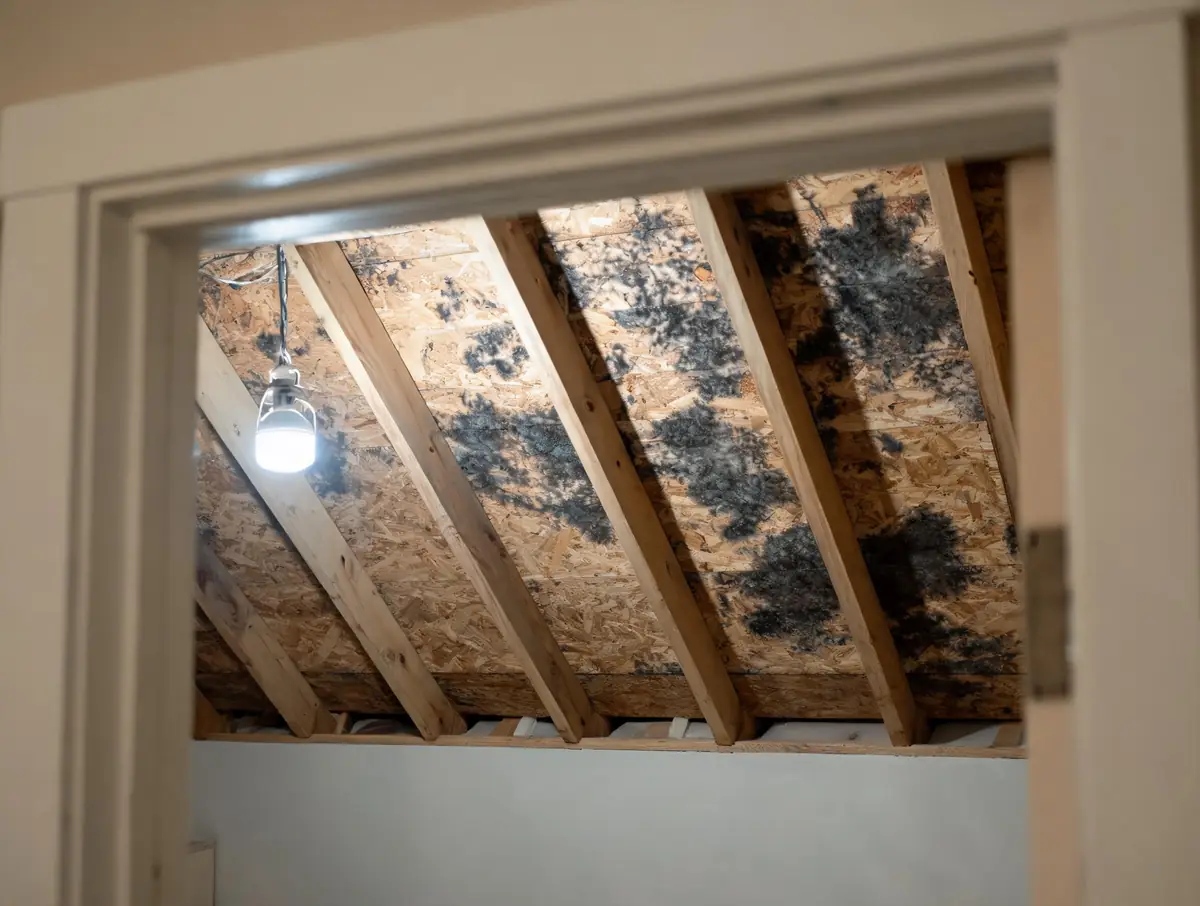 BeforeAfter
Drag the handle to compare. Every property is different — we scope yours on site.
Attic Mold Remediation FAQs
Is attic mold dangerous?
Attic mold is usually less of a direct exposure than mold in living areas, but spores can travel into the home through air leaks, ceiling fixtures and ductwork. The CDC notes that mold can cause stuffy nose, wheezing and irritation in sensitive people. Anyone with health concerns should talk to a doctor. Removing the mold and fixing the moisture source is the best long-term answer. More on how dangerous mold actually is.
Can I just spray bleach on attic mold?
We don't recommend it. Bleach doesn't soak into wood well, adds moisture to the sheathing and doesn't remove the mold itself. The EPA and the IICRC S520 standard both focus on physically removing mold and fixing moisture. Spraying without addressing ventilation means the growth comes back. See whether bleach kills mold.
Does attic mold mean I need a new roof?
Usually not. Most attic mold in Gettysburg homes is on solid sheathing that can be cleaned and treated. Replacement is only needed when plywood or OSB is soft, delaminated or rotted. We take moisture readings and probe the wood to tell you which panels, if any, need replacing. More on mold on attic sheathing.
How long does attic mold remediation take?
Most attics take one to three days. Small areas can be done in a day. Large attics with insulation removal, heavy growth or ventilation changes can take longer. We'll give you a timeline with your written estimate. See typical remediation timelines.
Do I need to leave my home during attic mold removal?
Most families stay home during attic work because the attic is sealed and kept under negative pressure with HEPA filtration. We may ask you to avoid the hallway or room under the hatch while we work. If someone in the home has asthma or a weakened immune system, ask your doctor and we can plan around it. More on staying home during the work.
Other Mold Services in Gettysburg
If you smell something musty, see a stain you can't explain, or are about to buy an older house, a professional mold inspection in Gettysburg, PA tells you what is growing, where the moisture is coming from, and what it will take to fix it. We look at your home the way a moisture detective would, then use air or surface testing only when it answers a real question. You get clear findings in plain language, not a scary lab printout.
Mold Inspection and Testing
Black mold removal in Gettysburg, PA starts with finding the water that feeds the mold, then sealing off the area so spores stay put while we remove what's growing. If you've found dark, slimy patches on drywall, wood, or ceiling tiles, you don't need to panic, but you shouldn't wait either. We're open 24 hours at (717) 420-8919, and we'll tell you plainly what you're dealing with and what it will take to fix.
Black Mold Removal
Basement mold remediation in Gettysburg, PA starts with one fact: most homes here sit on old stone, damp clay soil and a water table that rises every spring, so the space below your floor is the most likely place in the house for mold to grow. We remove mold from basements and crawl spaces, fix the moisture that fed it, and set the space up to stay dry through humid Adams County summers. We're open 24 hours at (717) 420-8919.
Basement & Crawl Space Mold Remediation
Water damage mold restoration in Gettysburg, PA starts the moment water gets where it should not be, because the clock on mold growth is already running. We dry the structure, find hidden moisture, remove anything that has started to grow mold, and put your home back on a path to normal. We are open 24 hours at (717) 420-8919 for leaks, floods and burst pipes.
Water Damage & Mold Restoration
Air duct mold removal in Gettysburg, PA works best when the whole HVAC system is treated as one unit: the ductwork, the evaporator coil, the drain pan, the blower and the air handler cabinet. We clean each part, fix the moisture that let mold grow and verify the results, and we're open 24 hours at (717) 420-8919.
HVAC and Air Duct Mold Remediation
Commercial mold remediation in Gettysburg, PA has to fit around tenants, guests, closing dates and business hours, and that is how we plan every job. We work with landlords, property managers, business owners, home sellers and caretakers of historic buildings in Gettysburg, the Adams County seat, and we are open 24 hours when a leak or a failed inspection cannot wait.
Commercial, Rental and Real Estate Mold Remediation
Mold remediation cost in Gettysburg, PA typically runs $500 to $1,500 for a small area under 10 square feet, $1,500 to $6,000 for a basement or crawl space, and $10,000 to $30,000 or more for a whole home. This page breaks down what those numbers include, what pushes a job up or down, how homeowners insurance treats mold, and how to read an estimate so you only pay for work you need.
Mold Remediation Cost
Our mold remediation process follows the IICRC S520 standard step by step, from the first inspection to independent clearance testing and rebuild, so mold in your Gettysburg home is removed at the source and the moisture that fed it is fixed. Here is what happens on a job, what it costs, and how to keep mold away.
Our Mold Remediation Process
Need Attic Mold Remediation in Gettysburg?
We answer 24 hours a day. Free, no-obligation estimate after an on-site look.