
Mold guide
Moisture Meter Readings Explained: What the Numbers Mean on Drywall, Wood and Concrete
A moisture meter number only means something when you know what scale it is on and what material it is reading. On wood, a calibrated pin meter gives an actual moisture content percentage. On drywall, plaster and concrete, most readings are relative: useful for comparing wet spots with dry ones, not as an absolute percentage.

By Dale Hoffman, Remediation Lead
Published
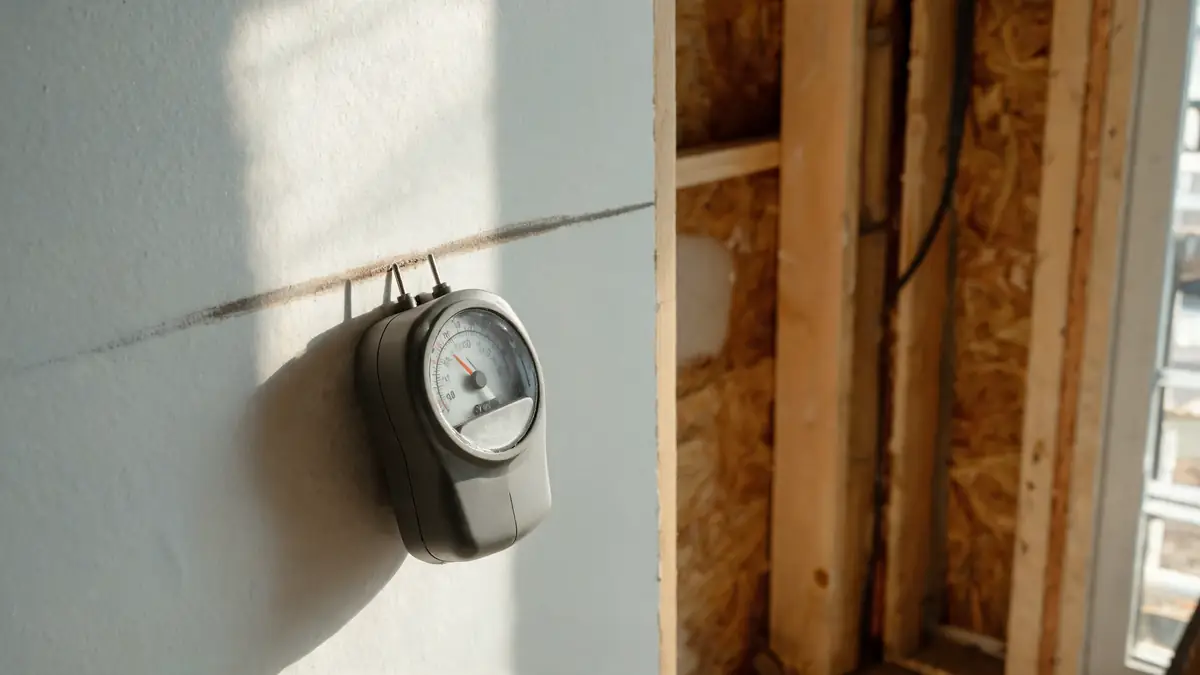
Why Moisture Readings Confuse People
Most homeowners buy a meter, press it to a wall, and get a number like 18 or 42. Then they search online and find five different answers about whether that number is good or bad.
The confusion has three causes. Meters use different methods. Meters use different scales. And the same number means different things on wood, drywall and concrete.
This guide focuses on reading the numbers. For a broader look at how inspectors use meters alongside thermal cameras and hygrometers, see our guide on how mold inspectors find moisture.
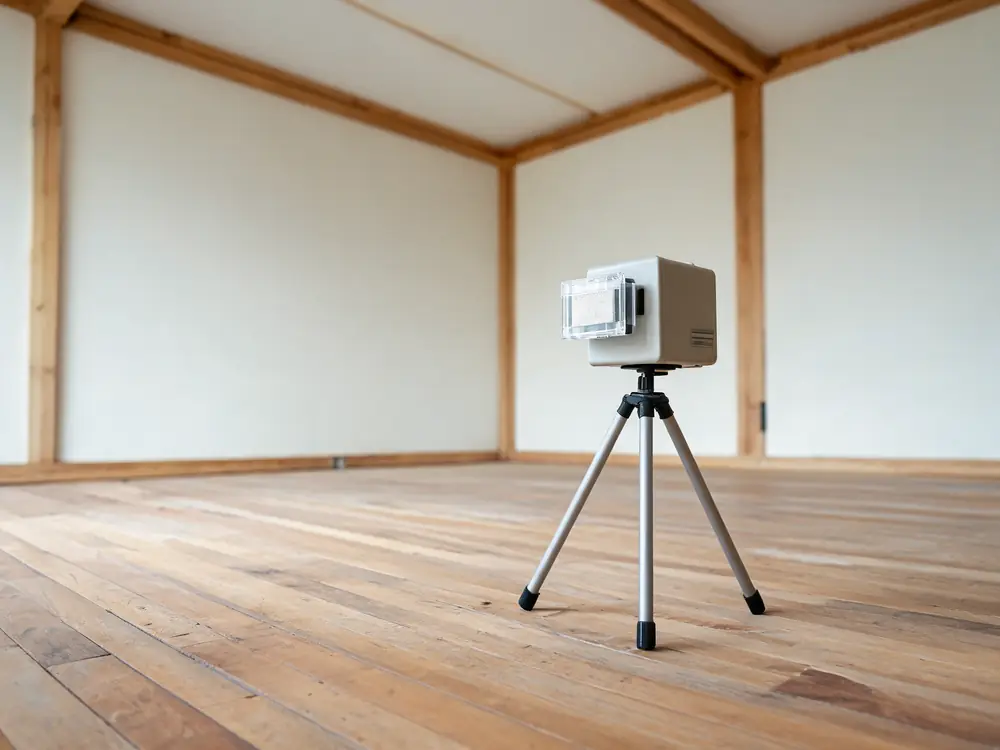
Pin vs. Pinless Meters
Pin meters
A pin meter pushes two small metal pins into the material and measures electrical resistance between them. Wet material conducts electricity better than dry material, so lower resistance means more moisture.
- Strength: reads at the depth the pins reach, so you know where the moisture is.
- Strength: on wood, a calibrated meter gives a true moisture content percentage.
- Limit: leaves small holes.
- Limit: only reads the spot between the pins, so you need many readings to map an area.
- Limit: salts, foil facings and some treatments can push readings higher than actual moisture.
Some pin meters accept insulated hammer probes that read only at the tips. These let an inspector drive the probe into a bottom plate or subfloor and read the core, not the surface.
Pinless meters
A pinless meter sends a low-energy electromagnetic field into the material through a flat pad. It reads how the material affects that field, which changes with moisture.
- Strength: no holes, so it is fast for scanning a whole wall or floor.
- Strength: good at finding the edges of a wet area.
- Limit: reads an average over a volume, often a fraction of an inch to about an inch deep, depending on the model.
- Limit: metal behind the surface, such as screws, corner bead, pipes and foil, can cause false high readings.
- Limit: the material's density affects the number, so it needs the right setting.
Inspectors often use both. A pinless scan finds the wet area quickly. Pin readings then confirm it and show how deep the water goes.
Reference Scales vs. Relative Scales
This is the part most people miss. The number on the screen can mean two very different things.
| Scale type | What the number means | Where it is valid |
|---|---|---|
| Wood moisture content (%MC) | Weight of water as a percent of the dry weight of the wood | Wood, when the meter is set for that species or corrected for it |
| Wood scale used on other materials | A wood-equivalent number, not true moisture content | Only for comparing readings on the same material |
| Drywall or gypsum scale | A scale calibrated for gypsum on some meters | Drywall, with that specific meter |
| Relative or reference scale (often 0 to 100) | An arbitrary scale set by the manufacturer | Comparing wet with dry areas of the same material |
A relative scale reading of 40 is not 40% moisture. It is just higher than 20 and lower than 60 on that meter. Two brands can show very different relative numbers on the same wet spot.
Use a dry reference
The most reliable way to use a relative reading is to compare it with a known dry area. Professionals call this a dry standard.
- Pick the same material in an unaffected area, such as drywall on an interior wall in another room.
- Take several readings there and note the typical number.
- Take readings in the suspect area with the same meter and setting.
- A reading clearly above your dry reference means extra moisture. A reading at or near it means dry.
Drying is complete when the suspect area reads within the normal range of your dry reference, not when it hits a number from the internet.
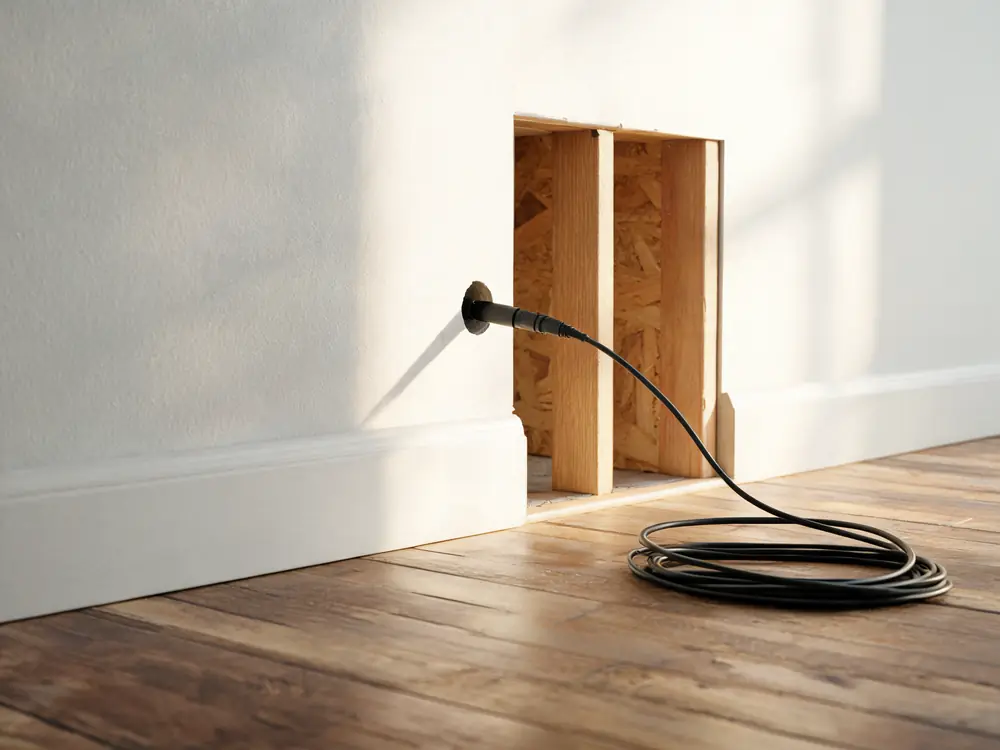
What Readings Mean on Wood
Wood is the one material where a meter can give a true percentage. Moisture content is the weight of water in the wood compared with the wood's dry weight.
The USDA Forest Products Laboratory's Wood Handbook chapter on biodeterioration explains that serious decay occurs only when wood is above the fiber saturation point, which averages about 30%. It also says drying wood to 20% or less and keeping it dry prevents decay fungi. The same chapter notes that humid air alone can allow some mold fungi to develop on wood, even when it cannot support decay.
| Wood reading (true %MC) | What it usually means |
|---|---|
| Well below 20% | Dry; inside the range the Forest Products Laboratory treats as safe from decay |
| Creeping up toward 20% | Damp; compare with dry framing nearby and find out why |
| Above 20% | Wet; mold can establish and the cause needs fixing |
| Near or above 30% | Saturated; risk of decay as well as mold if it stays wet |
Readings change with species, temperature and meter. Set the meter to the species if it has that option. Southern pine, spruce and oak each read a little differently.
Joists, sill plates and subfloors are the most common wood readings in basements and crawl spaces. Our guide to mold on floor joists covers what high readings there usually mean.
What Readings Mean on Drywall and Plaster
Drywall is gypsum with paper facing. Gypsum holds very little water when dry, so even a small amount of moisture makes a big jump on a meter.
- Use the drywall scale if your meter has one. Otherwise use the relative scale and a dry reference.
- Wet drywall often reads several times higher than dry drywall on the same meter. The jump is usually obvious.
- Take readings at the bottom of the wall, around windows and below plumbing. Water wicks up from the floor and runs down from above.
- Watch for false highs near metal corner bead and screws.
Plaster on older Gettysburg homes is harder to read. Lime plaster, horsehair binder and lath behind it all affect the reading. Use a dry reference on plaster in the same house, and expect more variation. Our guide to mold inside walls after a leak covers what happens behind wet drywall and plaster.
What Readings Mean on Concrete and Masonry
Concrete, block and stone are the hardest materials to read. Handheld meters only give relative readings on them, and the surface reading may not reflect what is happening deeper.
- Use the masonry or relative scale and compare with a dry area of the same slab or wall.
- Salts in concrete and old mortar can push readings up even when the surface feels dry.
- A slab that reads high near the walls and low in the middle often points to water entering at the edges.
- Flooring installers use different tests, such as in-slab humidity probes, to judge whether a slab is ready for flooring.
Fieldstone basements in the Gettysburg borough often read damp most of the year. The more useful question is whether readings rise after rain or in spring, and whether wood touching the stone stays dry.
Why Numbers Differ, and How to Use Them
Why two meters disagree
Two meters on the same spot can disagree, and both can be working correctly. Common reasons:
- Different methods. Resistance and electromagnetic readings respond to moisture differently.
- Different depths. A pin reads at the pin tips. A pinless pad reads an average through its sensing depth.
- Different scales. Relative scales are set by each manufacturer and are not standardized.
- Different settings. Species, material group and temperature correction all change the result.
- Surface effects. Condensation, salts, paint and foil can affect readings.
The practical rule: compare a meter only with itself. Use the same meter, setting and spots each time you check whether an area is drying.
How to use your readings
A single reading is a clue. A pattern of readings is evidence. Map the wet area by taking readings in a grid until you find dry edges, then note the numbers and the date.
Recheck every day or two while drying. Readings that fall toward the dry reference mean drying is working. Readings that hold steady or rise mean water is still getting in.
If the wet area keeps growing, or you cannot find where the water comes from, our guide on how to find a hidden water leak walks through the next steps. Remember that air moisture matters too, and our guide to indoor humidity and dew point explains how humid air wets cold surfaces.
The EPA advises drying water-damaged materials within 24 to 48 hours to prevent mold. Readings that stay high past that window are a reason to act.
When to Call a Professional
Call if readings stay high after two days of drying, if wet areas keep spreading, or if you find high readings with a musty smell or visible growth. Professional moisture mapping combines pin and pinless meters with thermal imaging to find the full extent of the water.
We provide free on-site mold inspections with moisture mapping in Gettysburg, Adams County and Hanover, and handle drying and mold cleanup after water damage. Our readings and photos also go into the documentation you can share with your insurer. Call (717) 420-8919, 24 hours a day.