
Mold guide
Winter Condensation Mold on Walls: Why Cold Corners Grow Mold
Mold that appears on walls in winter is usually caused by condensation, not a leak. When warm, moist indoor air touches a cold exterior wall or corner, it can cool below its dew point and leave moisture on the surface. Behind furniture and in closets, that moisture never dries, and mold starts to grow during long Pennsylvania cold spells.

By Dale Hoffman, Remediation Lead
Published
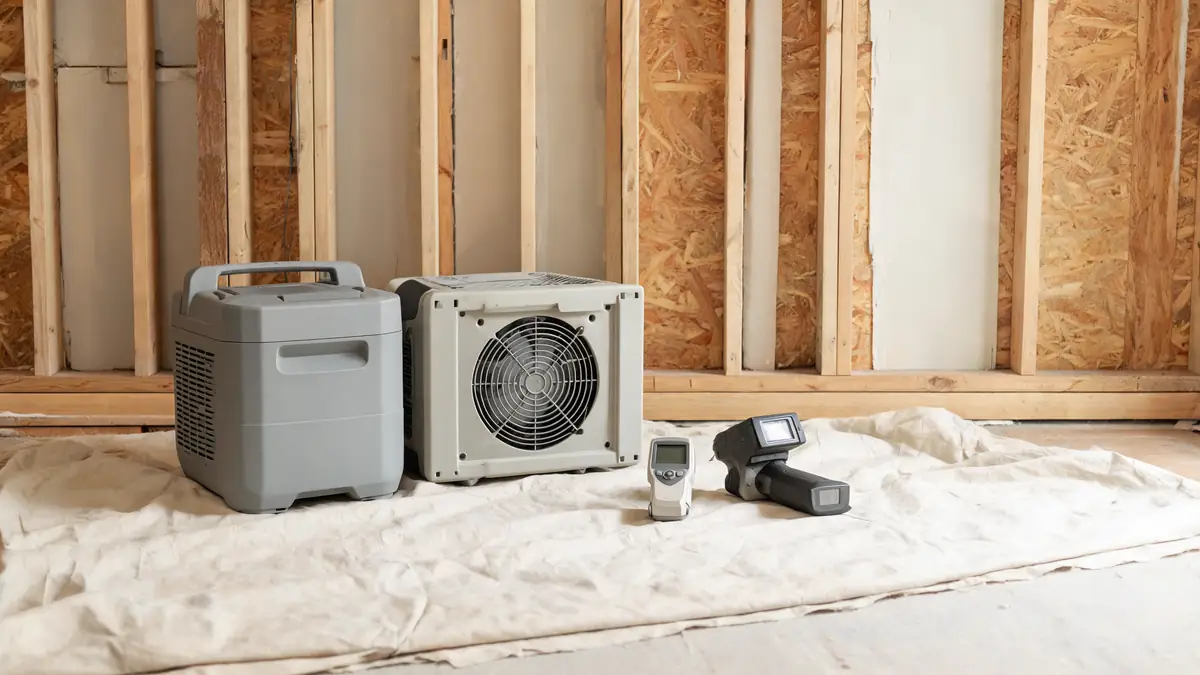
Why Mold Shows Up on Walls in Winter
Indoor air always holds some water vapor. In winter, homes are closed up, so moisture from cooking, showers, laundry and breathing stays inside. The air may feel dry, but it can still carry enough moisture to condense on cold surfaces.
Exterior walls get cold when outdoor temperatures drop. The colder the surface, the less moisture the air next to it can hold. When the surface falls below the air's dew point, water forms on it. That thin film of water, repeated night after night, is enough for mold.
The EPA notes that condensation can be a sign of high humidity and recommends that you reduce humidity, increase ventilation and insulate cold surfaces to prevent it.
Dew point in plain terms
Dew point is the temperature at which air becomes saturated and water starts to condense. It depends on how much moisture is in the air, not just the room temperature.
The table below shows approximate dew points for a room kept at 70°F. If any surface in the room is colder than the dew point, moisture can form on it.
| Indoor relative humidity at 70°F | Approximate dew point | What it means |
|---|---|---|
| 30% | About 37°F | Low condensation risk on most walls |
| 40% | About 45°F | Cold windows may fog in deep cold |
| 50% | About 50°F | Poorly insulated corners can get damp |
| 60% | About 55°F | Condensation likely on cold walls and windows |
The lesson is simple: the higher the indoor humidity, the warmer a surface has to stay to remain dry. In a cold snap, lowering humidity a little can make a big difference. Our guide to indoor humidity and dew point explains the math in more detail.
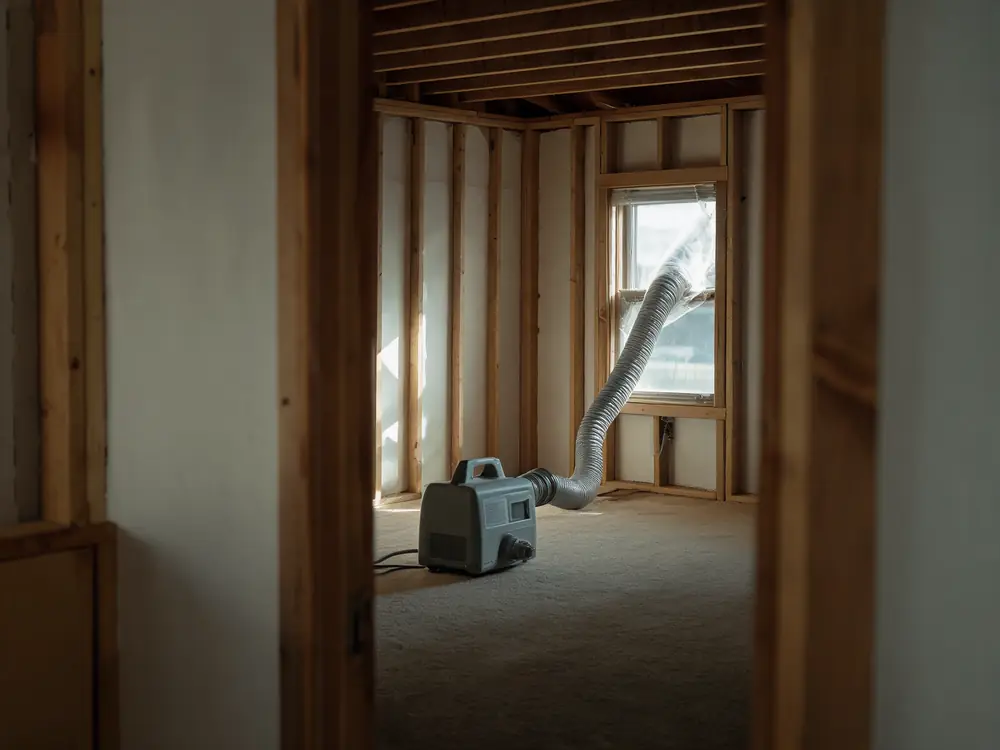
The Coldest Spots in a Room
Condensation mold follows the cold. These are the places it shows up most often:
- Exterior corners: two outside walls meet, there is extra framing, and insulation is often thin or compressed.
- Where walls meet ceilings: top-floor rooms under an attic with missing or shifted insulation.
- Low on exterior walls: near the floor, where cold air settles and the rim joist may be uninsulated.
- Around windows: cold glass and frames, plus the wall just below the sill.
- Closets on outside walls: doors stay closed, so the space stays cold and the air does not move.
- Over framing and steel: studs, headers and metal fasteners conduct cold through the insulation.
Sometimes the mold forms faint lines that match the studs behind the drywall. That pattern is a strong sign of cold framing, not a leak. Window condensation has its own guide: see mold on window sills.
Furniture against exterior walls
A dresser, bookcase, headboard or couch pushed flat against an outside wall creates a pocket of still air. Warm room air cannot reach the wall behind it, so the wall gets colder. Moisture condenses and has no chance to dry.
Many people find this mold only when they move furniture in spring. The wall behind looks fine at eye level and dotted with mold near the floor.
- Leave a gap of a few inches between large furniture and exterior walls.
- Move storage boxes off outside walls in basements and closets.
- Avoid stacking clothes or bedding against cold closet walls.
- Check behind furniture on north-facing walls during cold spells.
Closets are a frequent trouble spot. Our guide to mold in closets covers airflow and storage in more detail.
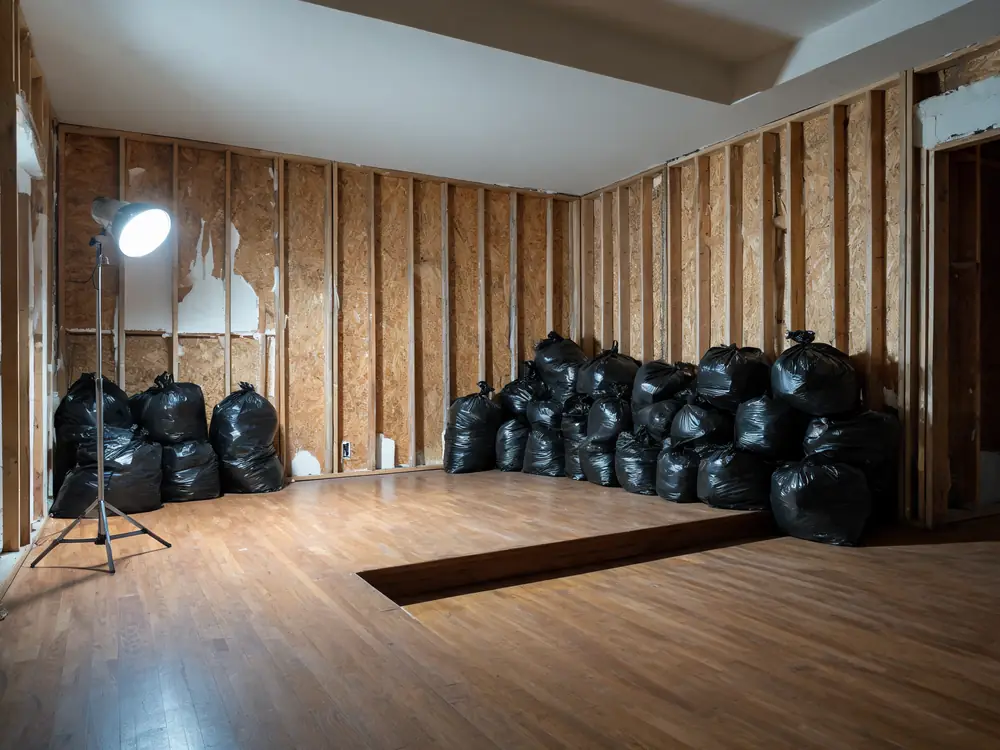
Condensation or Leak? How to Tell
Winter wall mold is often blamed on a leak, and sometimes it is one. The pattern usually tells you which.
| Clue | Points to condensation | Points to a leak |
|---|---|---|
| Timing | Worse in cold snaps | Worse after rain or snowmelt |
| Location | Corners, behind furniture, low on outside walls | Below windows, roof lines, pipes or fixtures |
| Pattern | Even spotting, sometimes in stud lines | Stain with a defined edge or drip path |
| Wall feel | Surface damp, wall firm | Drywall soft, swollen or bubbling |
| Season | Fades in summer | Can happen any time of year |
A moisture meter helps. Condensation usually wets only the surface, so the wall material underneath often reads close to normal. A leak tends to read wet deeper in the material and over a wider area.
If you see signs of both, deal with the leak first. Our guide on how to find a hidden water leak walks through simple checks.
Ventilation and Moisture Sources
The other half of the problem is how much moisture you add to the air. A typical household adds moisture every day from showers, cooking, laundry and people.
Common winter moisture sources
- Showers and baths without a working exhaust fan
- Cooking without a range hood vented outside
- Clothes dried on racks indoors
- Clothes dryers venting into the house or a crawl space
- Humidifiers set too high
- Unvented space heaters that burn fuel
- Large numbers of houseplants or aquariums
- A damp basement or crawl space feeding moisture upstairs
Practical ventilation steps
- Run bathroom fans during showers and for a while afterward.
- Make sure bath fans vent outside, not into the attic. See attic ventilation and mold.
- Use a range hood that vents outside when cooking.
- Turn down whole-house or room humidifiers during very cold weather.
- Keep interior doors open so heat reaches every room.
- Do not block heating registers with furniture or rugs.
The EPA recommends keeping indoor relative humidity below 60 percent, ideally between 30 and 50 percent. A basic hygrometer costs little and shows you where your home sits. In bathrooms where mold keeps returning, see our bathroom and kitchen mold removal service.
Pennsylvania Winters and Older Homes
Central Pennsylvania winters bring long stretches of cold with occasional deep freezes. Each cold snap pushes exterior wall surfaces colder and raises condensation risk.
Older homes in Gettysburg and across Adams County often have little or no insulation in exterior walls. Plaster walls on solid brick or stone can run cold all winter. Our guide to mold on plaster walls in old homes covers that situation.
Many of these older homes also have single-pane windows or old storm windows. Cold glass collects water first, and that water runs down onto sills and the wall below.
Newer, tighter homes have the opposite issue. They hold heat well but also hold moisture. Without enough ventilation, indoor humidity can climb high enough to condense on windows and corners.
College rentals with several occupants, drying racks and closed doors can see this too. Our guide to mold in student rentals covers that setting.
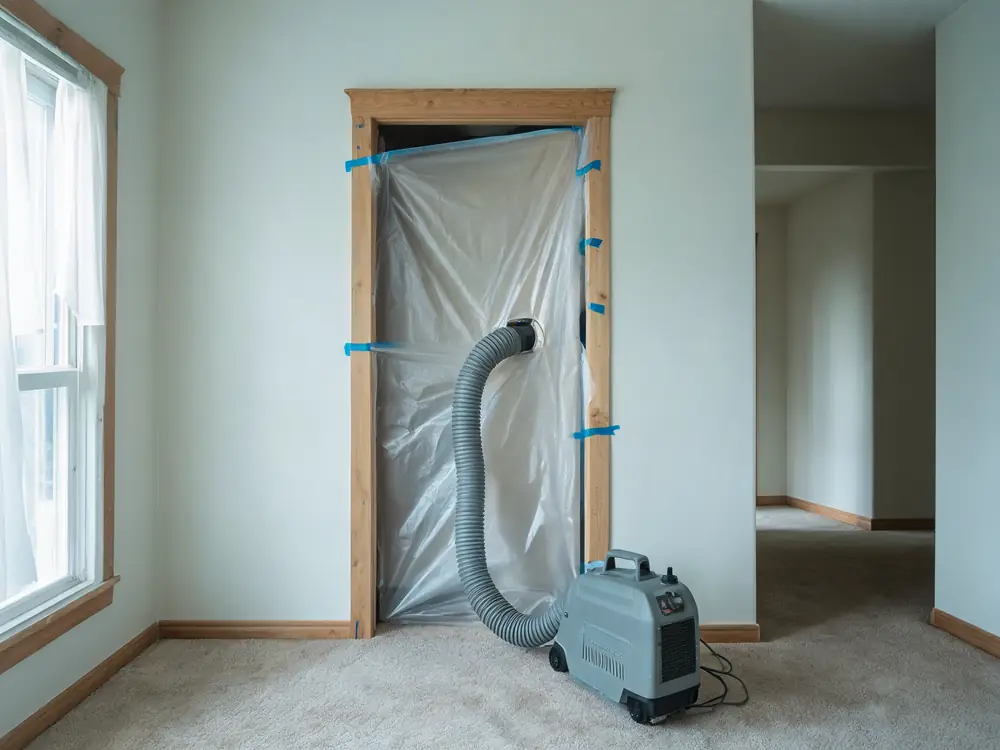
Rooms That Need Extra Attention
Some rooms produce more moisture or run colder than others. These deserve a closer look each winter.
Bedrooms
People breathe out moisture all night with the door closed. A bedroom with an exterior corner, a bed against the outside wall and a closed door is a classic setup for condensation mold.
Basements
Basement walls stay cool year round. Finished basements with drywall over foundation walls can trap condensation behind the wall where it is hard to see.
Bathrooms
Showers add a lot of moisture in a short time. If the fan is weak or vents into the attic, walls and ceilings stay damp much longer in winter.
Cleaning Small Spots and Preventing Return
Small patches of condensation mold on painted walls can often be cleaned by the homeowner. Wear gloves and eye protection, use a detergent solution, and dry the surface well. Avoid dry brushing, which spreads spores.
Cleaning without changing conditions will not last. The same spot will grow again next winter. To stop it:
- Lower indoor humidity during cold weather.
- Improve air movement to cold walls and corners.
- Move furniture off exterior walls.
- Have insulation checked in the problem wall or attic above.
- Repaint with a quality paint once the wall is dry.
Keep an eye on the same spots through the rest of the winter. A hygrometer in the problem room shows whether your changes are working. If the humidity stays high even with fans and less moisture added, the source may be a damp basement or crawl space feeding the rest of the house.
If growth is fuzzy, spreading, or under wallpaper, it may go deeper than the paint. The EPA's general guidance uses about 10 square feet as the point where professional help becomes more important.
When to Call a Professional
Call if mold covers a large area, returns every winter despite good habits, or appears with soft drywall or a musty smell that does not fade. Those signs can point to missing insulation, an air leak or a hidden water problem. A mold inspection with moisture mapping helps sort condensation from leaks. We serve Gettysburg and Adams County 24 hours a day at (717) 420-8919.