Mold guide
Mold Exposure Symptoms in Children and Older Adults: What the CDC and EPA Say
According to the CDC and EPA, the most common reactions to indoor mold are allergy-type symptoms such as a stuffy nose, cough, wheezing or itchy eyes. People with asthma, mold allergies, chronic lung disease or a weakened immune system face the most risk. We are a mold remediation company, not medical providers, so this guide summarizes public health sources.

By Dale Hoffman, Remediation Lead
Published
An Important Note Before You Read
We remediate mold. We do not diagnose or treat health conditions, and nothing here is medical advice.
This guide summarizes what public health agencies say, with links to their pages so you can read them yourself. For questions about your own health or a family member's, talk with a doctor or your local health department.
If you are worried about a child, an older parent or anyone with a health condition, the most useful step is a conversation with their doctor. The second is finding and fixing the moisture in the house. We can help with the second one.
We have kept this summary narrow on purpose. Mold health effects are an area where research is ongoing, and a lot of what you read online goes well beyond the evidence.
What the CDC and EPA Say About Symptoms
The CDC says that for some people, mold can cause a stuffy nose, sore throat, coughing or wheezing, burning eyes, or skin rash. It also notes that some people have no reaction at all.
The EPA describes mold as a source of allergens and irritants. Its mold and health page lists hay fever type reactions such as sneezing, runny nose, red eyes and skin rash. It adds that mold can irritate the eyes, skin, nose, throat and lungs of both allergic and non-allergic people.
Here is how those sources group the effects:
| Type of effect | Examples named by CDC or EPA |
|---|---|
| Allergic reactions | Sneezing, runny or stuffy nose, red or itchy eyes, skin rash |
| Irritation | Eye, skin, nose, throat and lung irritation |
| Breathing symptoms | Coughing, wheezing, asthma attacks in people with asthma and mold allergy |
| Infection | Lung infections in people with weakened immune systems or chronic lung disease |
The EPA notes that symptoms other than allergic and irritant reactions are not commonly reported from breathing mold, and that research continues.
Who Is at Higher Risk
Public health sources focus on underlying conditions more than age. These are the groups they name.
People with asthma or mold allergies
The CDC says people with asthma or mold allergies may have severe reactions. The EPA says mold can trigger asthma attacks in people who have asthma and are allergic to mold, and advises that people with asthma avoid contact with or exposure to molds.
People with weakened immune systems or chronic lung disease
The CDC says people with a weakened immune system or chronic lung disease may develop lung infections from mold. Examples of weakened immunity include people being treated for cancer, organ or stem cell transplant recipients, and people taking medicines that suppress the immune system.
Children
The CDC notes that early mold exposure has been linked to the development of asthma in some children, particularly those who may be genetically susceptible. Children with asthma or allergies fall into the higher-risk groups above.
The CDC also addresses a question many parents find online: a link between mold and bleeding in the lungs of infants. According to the CDC, that link has not been proven, and more research is needed.
Older adults
The CDC and EPA pages we reviewed do not list older age by itself as a risk factor. What they name are conditions. If an older family member has asthma, COPD or another chronic lung disease, or takes medicine that suppresses the immune system, the higher-risk guidance applies to them.
When to See a Doctor
The CDC says people with persistent symptoms should see their physician. The EPA suggests consulting a health professional or your state or local health department for more detailed information.
Practical points families often find helpful:
- Tell the doctor about the mold and where it is in the home.
- Mention when symptoms started and whether they ease when the person is away from home.
- Bring any inspection report or photos you have.
- Follow the doctor's advice about whether a higher-risk person should stay elsewhere during cleanup.
- Get medical care promptly for any difficulty breathing.
We cannot tell you whether mold is causing a symptom. A doctor can evaluate that. What we can do is find the source of moisture, remove the mold and recommend testing to confirm the work.
Protecting Higher-Risk Family Members During Cleanup
The CDC's mold cleanup guidance says these groups should not take part in cleanup:
- People with allergies, who may be more sensitive to mold
- People with immune suppression or underlying lung disease
- People with chronic respiratory diseases like asthma or COPD
The same page advises that people with asthma, COPD or a compromised immune system should not stay in a moldy home or be there while it is being cleaned.
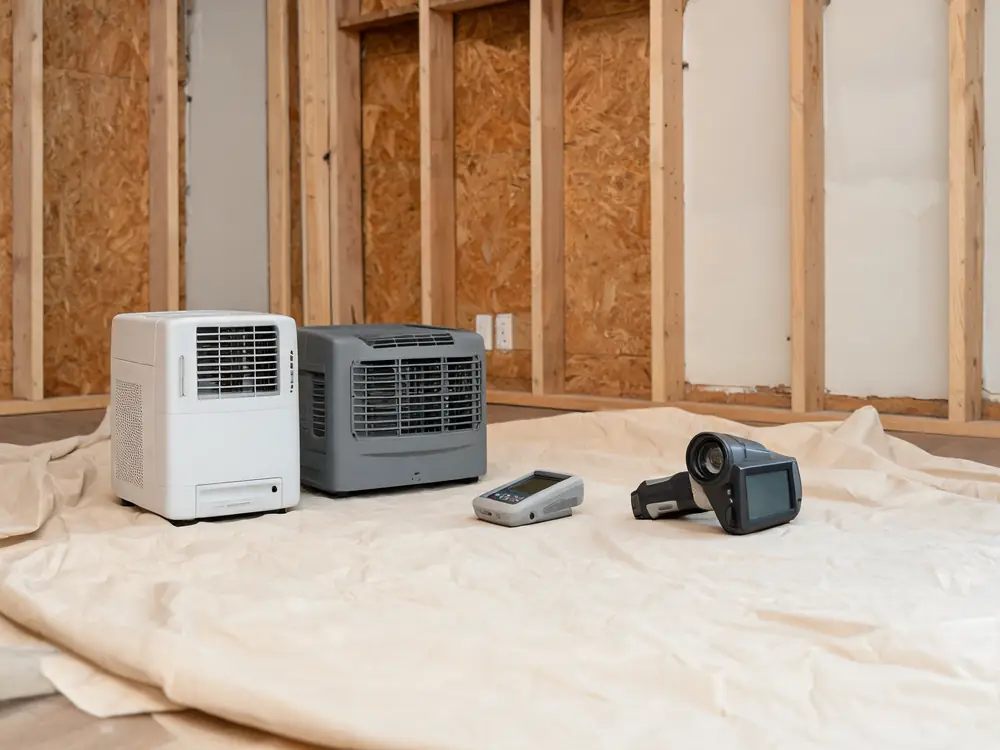
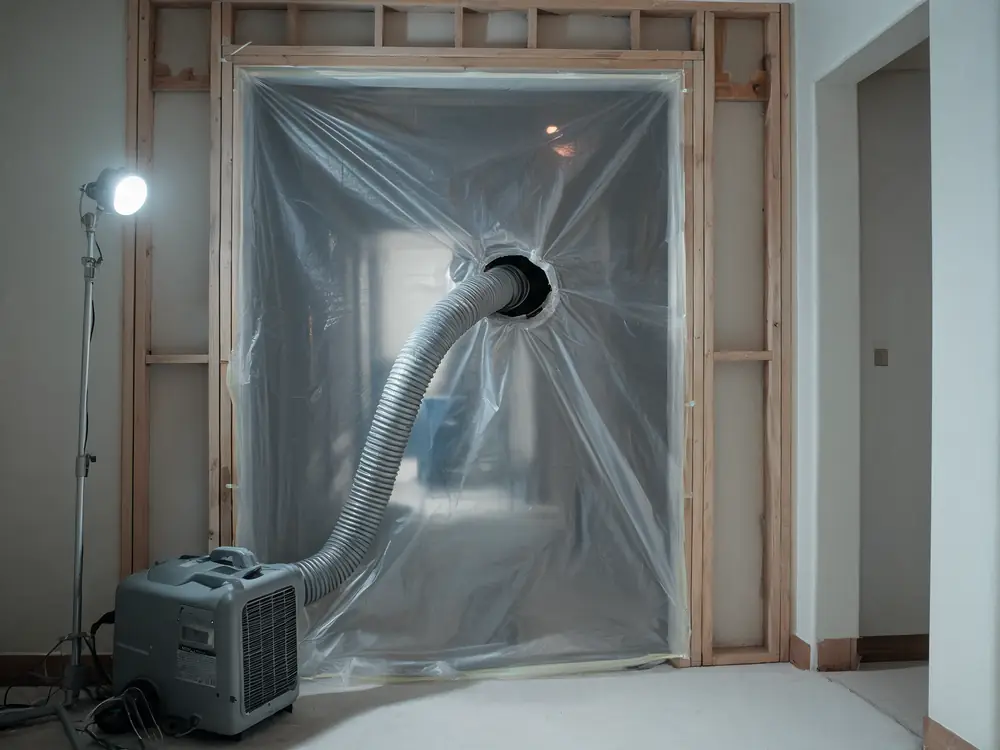
That is one reason professional remediation uses containment and negative air. Poly sheeting walls off the work area, and HEPA air filtration keeps spores from spreading to the rest of the house. Our guide on whether you can stay home during mold remediation explains how we plan around occupied homes.
If you are considering doing the work yourself, read when you can remove mold yourself first. A higher-risk household member is a strong reason to leave the job to others.
Reducing exposure while you wait for remediation
Sometimes there are a few days between finding mold and getting it removed. These steps focus on the building and help limit spread in the meantime.
- Do not disturb it. Scraping, sanding or dry brushing releases spores into the air.
- Stop the water. Shut off a leaking line or catch drips so the area does not get wetter.
- Close off the room. Keep the door shut if the mold is in one room.
- Keep humidity down. The EPA recommends indoor relative humidity below 60 percent, ideally 30 to 50 percent.
- Avoid fans blowing across the growth. Moving air can carry spores to other rooms.
- Keep higher-risk family members away from the area, consistent with the CDC cleanup guidance above.
Children's rooms, basements used as playrooms and bathrooms are common places for families to find mold. Our guide to signs of hidden mold covers where else to look.
Planning for older relatives
Older adults who live alone may not notice a musty smell or a slow leak, and they may be less able to move stored boxes or check a basement. A family member walking through the home a few times a year can catch moisture problems early. Look under sinks, in the basement, around windows and behind furniture on outside walls.
If an older relative has a lung condition or a weakened immune system, ask their doctor whether they should stay with family while any mold work is done.
What About Black Mold?
Many parents worry most about "black mold," often meaning Stachybotrys chartarum. The CDC says that Stachybotrys and other molds may cause symptoms that are nonspecific. Color alone does not tell you how risky a mold is.
The practical advice is the same for any mold: remove it safely and fix the moisture that let it grow. Our guides on whether black mold is dangerous and what black mold is go deeper.
What Testing Can and Cannot Tell You
Mold testing measures the building, not the person. Air and surface samples can show whether spore levels indoors differ from outdoors and which types are present.
- Testing can help find hidden growth and confirm that cleanup worked.
- Testing cannot show that mold caused a symptom or diagnose any condition.
- There is no single spore number that is "safe" for every person.
When a household includes someone in a higher-risk group, many families choose testing after remediation for peace of mind. It gives an objective record that the work area is back to normal before the family moves back into that space.
After remediation, independent clearance testing gives you confidence the work area is back to normal. Our guide to post-remediation clearance testing explains what passing looks like. The mold FAQ covers other common questions.
When to Call a Professional
If someone in your home has asthma, allergies, lung disease or a weakened immune system, and you see or smell mold, it makes sense to have the home checked. A mold inspection and testing visit finds moisture and growth so it can be removed under containment. Please direct health questions to a doctor. For the building, call us at (717) 420-8919, 24 hours a day, anywhere in Gettysburg and Adams County.