What Clearance Testing Checks
A clearance assessment has three parts. A job needs to pass all three, not just the lab test.
Dealing with this in a Gettysburg property? That is the everyday work of professional mold remediation in Gettysburg.
1. Visual inspection
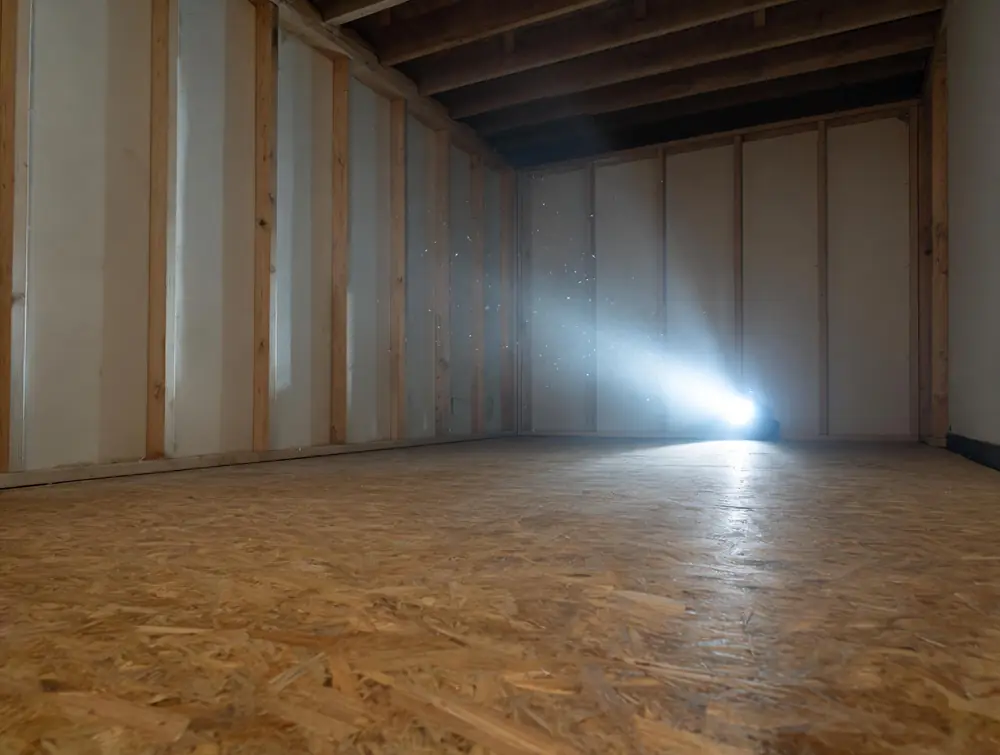
The tester walks the work area inside containment. They look for any remaining growth, staining that wasn't addressed, and dust or debris on surfaces. The EPA's remediation guidance states plainly that there should be no visible mold or mold-damaged materials left after cleanup. If the area isn't visually clean, sampling is pointless.
2. Moisture verification
Framing, subfloor, masonry, and any remaining drywall are checked with a moisture meter. If materials are still wet, mold can come back. This step also confirms the original water source was fixed.
3. Air sampling
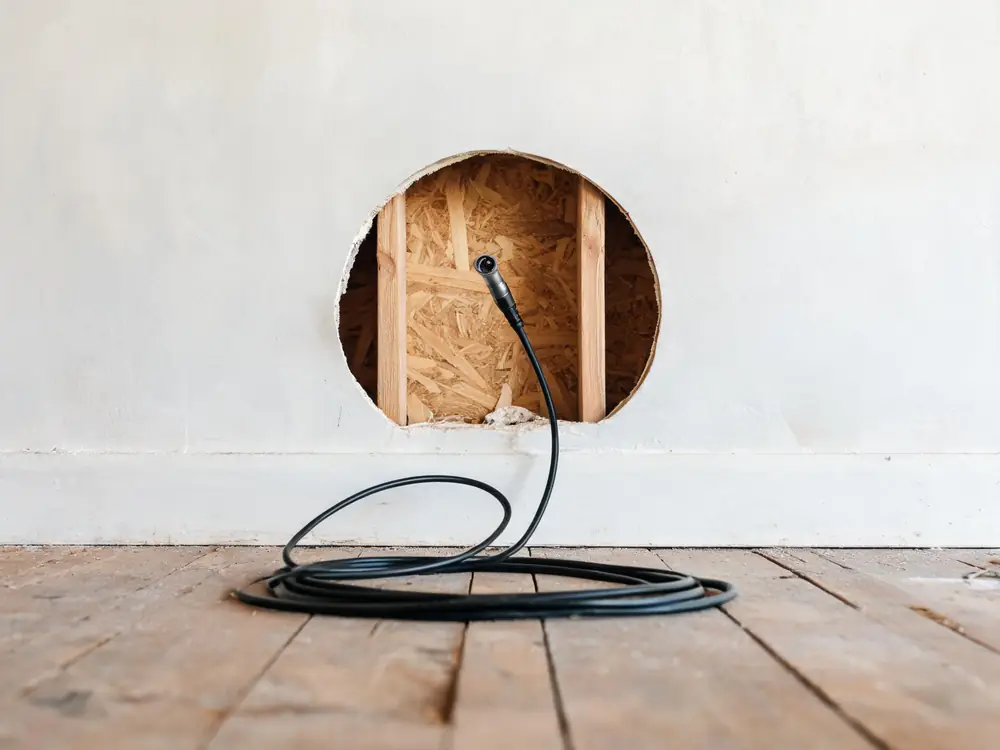
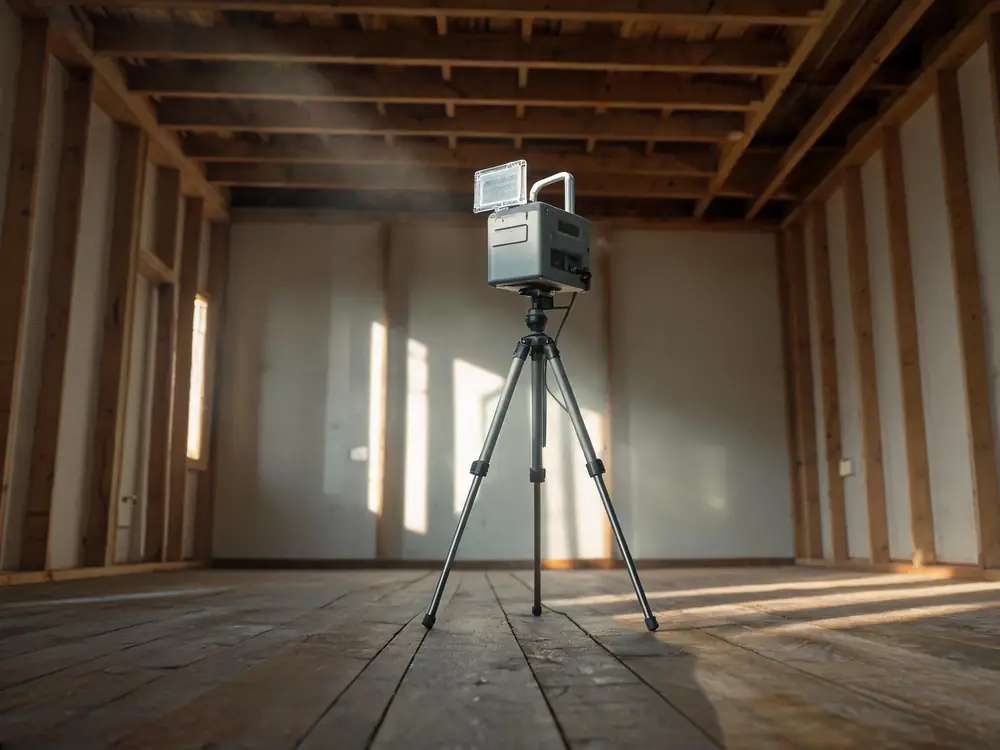
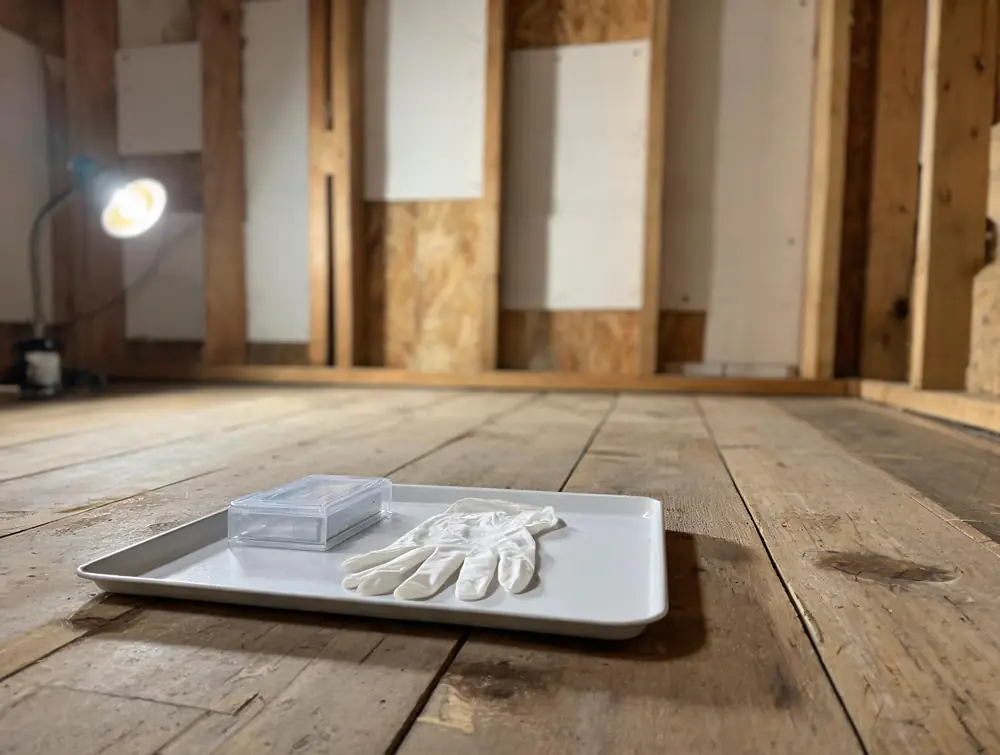
Air samples are taken inside the containment area and outdoors as a baseline. Sometimes a sample is also taken in an unaffected room of the house. Surface samples may be added on cleaned framing or surfaces.
What "Passing" Means
There's no federal numeric standard for indoor mold spores. Instead, clearance is judged by comparison and by condition. The IICRC S520 standard for mold remediation describes three conditions:
| Condition | What it means | Clearance status |
|---|---|---|
| Condition 1 | Normal fungal ecology, like what you'd expect in a similar building without water damage | The goal of remediation |
| Condition 2 | Settled spores or fragments from a nearby mold source, without active growth | Needs more cleaning |
| Condition 3 | Actual mold growth present | Remediation not complete |
In practice, a passing air test usually shows indoor spore counts similar to or lower than outdoors, with a similar mix of types. Water-damage molds like Stachybotrys or Chaetomium showing up inside containment when they're absent outdoors is a common reason for a fail.
Why Independent Testing Protects You
The company that removed the mold has an interest in the job passing. That doesn't mean they'll cheat, but it's a conflict of interest. An independent tester has nothing to gain from either result.
Independent clearance protects you in several ways:
- For homeowners: you get an unbiased answer on whether you got what you paid for.
- For insurance claims: a third-party report can help document that covered work was finished. Check with your insurer about what they require.
- For home sales: Pennsylvania's Seller's Property Disclosure Statement asks about water and mold issues. Documentation of past remediation and clearance can help you answer those questions accurately. Talk to your agent or a real estate attorney about disclosure details.
- For landlords: written clearance creates a record that you addressed a reported problem.
We recommend independent clearance on every significant job, including our own. It's part of how to choose a mold remediation company: a contractor who welcomes outside testing is showing confidence in its work.
What Happens if Clearance Fails
A failed test isn't a disaster. It's the system working. Common causes:
- Fine dust left on horizontal surfaces, like the tops of joists or window sills.
- Air scrubbers that weren't run long enough after cleaning.
- A missed area of growth behind a wall or under a floor.
- High outdoor spore levels on test day skewing comparison, which a good tester will account for.
The fix is usually more HEPA vacuuming, damp wiping, and air filtration, followed by a retest. Ask up front who pays for a retest if a job fails. Many remediation contracts cover re-cleaning at no charge.
Clearance in Gettysburg's Older Homes
Many older Gettysburg homes have fieldstone basements and rough-sawn joists. These surfaces are harder to clean completely than smooth drywall, and dust settles into every crack. Testers in these homes pay close attention to the tops of beams and the joints of stone walls. Humid summers also mean dehumidifiers need to keep running after the job, so materials stay dry and the result lasts.
Is Clearance Testing Always Needed?
Not for every small job. If you cleaned a few square feet of surface mold on a bathroom ceiling and fixed the fan, a visual check is often enough. Clearance testing makes the most sense for:
- Jobs larger than about 10 square feet, the EPA's size guideline for professional help.
- Remediation in HVAC systems or areas that share air with living space.
- Homes with occupants who have health concerns. Follow your doctor's advice.
- Insurance claims, real estate transactions, and rental properties.
- Any job where growth was hidden, since you can't see whether it's all gone.
If you're not sure the problem was fully found in the first place, review the signs of hidden mold before and after the work.
When to Call a Professional
If you've had mold removed and want proof it's gone, or you're planning remediation and want clearance built into the plan, our mold inspection and testing service can help. Call (717) 420-8919 any time to set it up.