Why Condensation Forms on Windows
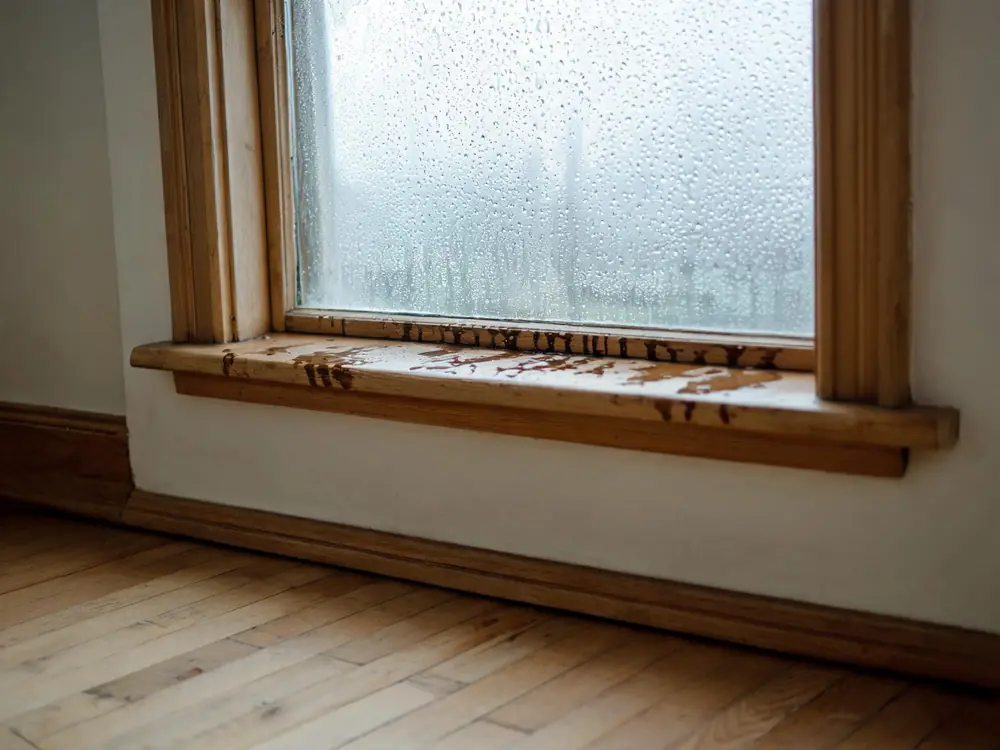
Air holds moisture as vapor. When warm indoor air touches a surface colder than its dew point, the vapor turns to liquid. In winter, the glass and frame are the coldest surfaces in most rooms, so that is where water collects.
Dealing with this in a Gettysburg property? That is everyday work for our crew.
Several things make it worse:
- High indoor humidity from cooking, showers, drying laundry indoors, houseplants and unvented gas heaters.
- Single-pane or old double-pane windows with failed seals.
- Heavy curtains and blinds that trap cold air against the glass.
- Tight new insulation in an old house with no added ventilation.
- Cold snaps, when outdoor temperatures drop well below freezing.
The EPA recommends keeping indoor relative humidity below 60 percent and ideally 30 to 50 percent. In very cold weather, you may need to stay near the low end of that range to keep windows dry.
Why Gettysburg Homes See It So Often
Many homes in the Gettysburg Historic District still have original wood windows, sometimes with storm windows added outside. Old wood sills soak up water, and the gap between a storm window and the main sash can trap moisture. Plaster walls around the window may also hold dampness. Because the Historic Architectural Review Board reviews exterior changes in the district, many owners repair and weatherstrip historic windows rather than replace them, which makes humidity control inside even more important.
How to Clean Mold Off a Window Sill
- Put on gloves, eye protection and an N95 respirator.
- Wipe up standing water and let the area dry.
- Scrub the sill, frame and track with detergent and water.
- Dry the surface fully with a towel and a fan.
- Check the wood with a screwdriver. If it sinks in easily, the wood has rot.
- Once dry, touch up paint or finish so bare wood does not absorb water.
Be careful with old paint. Homes built before 1978 may have lead paint on window sills and trim. Do not sand or scrape old paint without following lead-safe practices.
The EPA does not recommend bleach as a routine mold treatment, and it should never be mixed with ammonia. Detergent, water and prompt drying handle most sill mold.
How to Stop Window Condensation
| Fix | Why it helps |
|---|---|
| Run bath and kitchen exhaust fans vented outside | Removes moisture at the source. |
| Use a hygrometer to track humidity | Shows when indoor air is too wet. They cost about $10 to $20. |
| Run a dehumidifier in damp rooms | Keeps humidity in the 30 to 50 percent range. |
| Open curtains and blinds during the day | Lets warm room air reach the glass. |
| Weatherstrip and add interior storm panels | Warms the inner glass surface, which cuts condensation. |
| Fix failed double-pane seals or upgrade glazing | Fogged glass means the seal has failed and insulation is lost. |
| Keep storm window weep holes clear | Lets trapped water drain out instead of sitting on the sill. |
ENERGY STAR has guidance on efficient windows and ventilation fans if you decide to upgrade.

When Sill Mold Signals a Bigger Problem
Condensation mold usually stays on the surface. But if water has been running off the sill for several winters, it can seep into the wall below. Look for:
- Peeling paint or bubbling below the window.
- Soft or rotted sill wood.
- Stains on the wall or baseboard under the window.
- Mold that appears on the wall, not just the sill.
- Water getting in during rain, which points to a flashing or exterior leak rather than condensation.
Those signs suggest moisture inside the wall cavity. Our guide to mold in walls after a leak explains how that is checked and repaired.
When to Call a Professional
Call for help if the mold covers many windows or a large area, if it has spread into the wall, or if the sill and framing are rotted. Our water damage and mold restoration team in Gettysburg can check wall moisture, remove damaged materials under containment and help you pinpoint the humidity source. Call (717) 420-8919, any time. The EPA's mold and moisture guide has more on condensation control.