What "HEPA" Means
HEPA stands for high-efficiency particulate air. Under the U.S. Department of Energy standard, a true HEPA filter captures at least 99.97 percent of particles 0.3 microns in diameter, the size that is hardest to catch. Larger and smaller particles are captured even more efficiently. Most mold spores are a few microns or larger, so a sealed HEPA system catches them well.
Watch out for labels like "HEPA-type" or "HEPA-like." Those filters don't have to meet the 99.97 percent standard.
Questions about one specific room are worth putting to our company.
Air Scrubbers vs. Negative Air Machines
Pros use the same kind of machine in two ways:
| Setup | How it works | Purpose |
|---|---|---|
| Air scrubber (recirculating) | Pulls air from the room through filters and blows clean air back into the same space | Lowers airborne spores and dust during and after work |
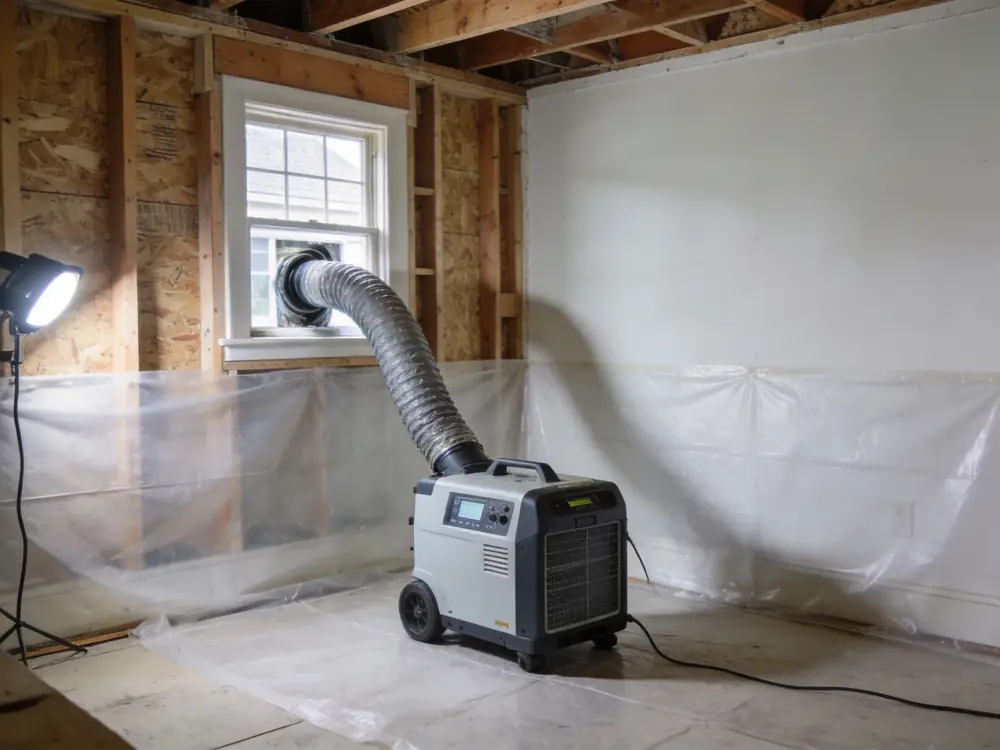
| Negative air machine | Pulls air from inside a containment area and exhausts it outside the containment, often through a window | Creates negative pressure so air leaks into the work area, not out to the rest of the house |
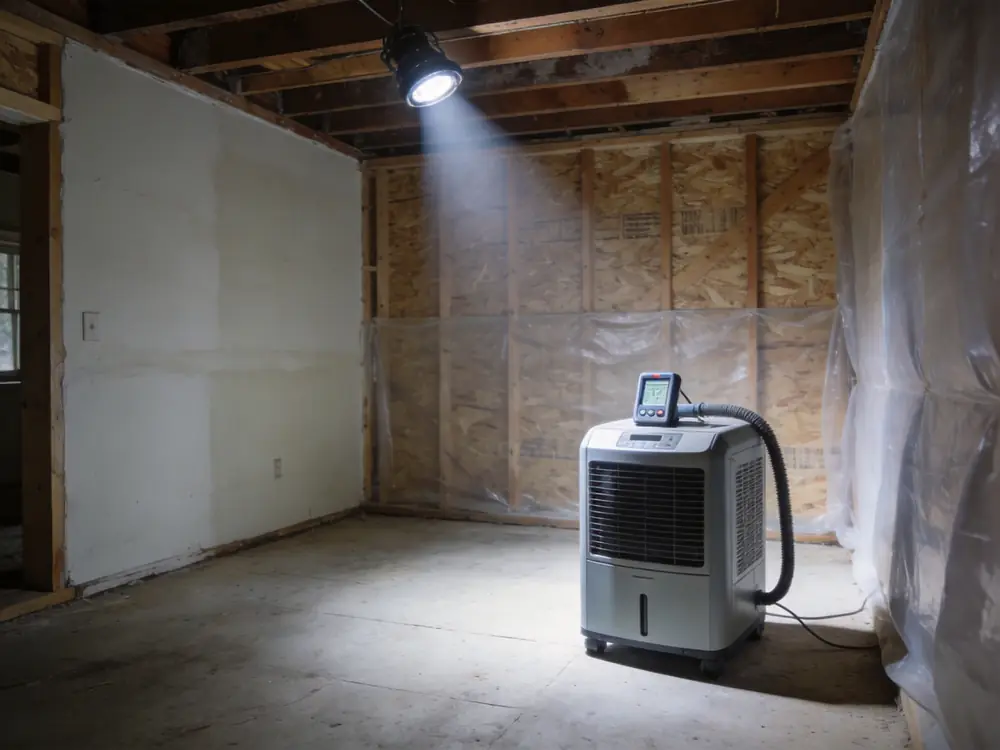
Negative pressure is the key to containment. When the work area is under slightly lower pressure than the rest of the home, any gap in the plastic lets clean air flow in instead of letting spores escape. You'll often see the plastic sheeting bow inward slightly, which is a quick visual check that it's working.
How Scrubbers Are Used During Remediation
- Setup: the work area is sealed with plastic, HVAC vents are covered and machines are placed and ducted.
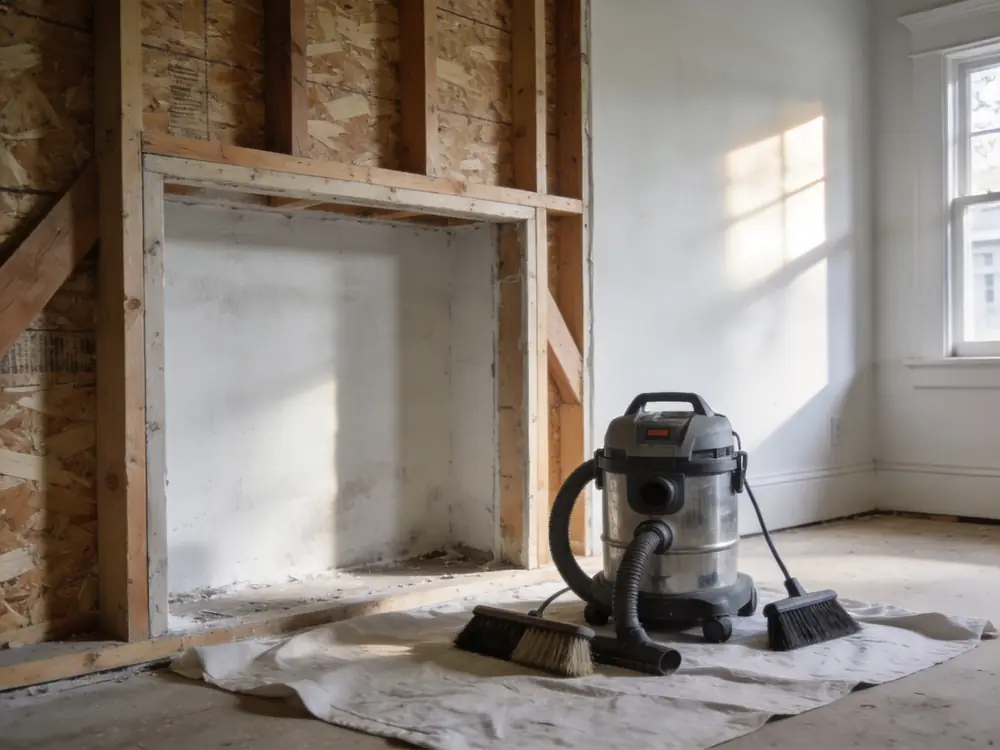
- During removal: machines run continuously while moldy materials are cut out, sanded or HEPA vacuumed.
- Detail cleaning: surfaces are HEPA vacuumed and wiped while machines keep scrubbing the air.
- After work: machines often run for a period after cleaning to capture settling particles before containment comes down.
- Verification: a visual inspection and, when recommended, independent clearance testing.
Machines are sized to the space so the air is filtered several times per hour. Pre-filters catch larger dust so the HEPA filter lasts longer. Used filters are bagged and disposed of carefully, since they are full of what they captured.
HVAC Work and Air Scrubbers
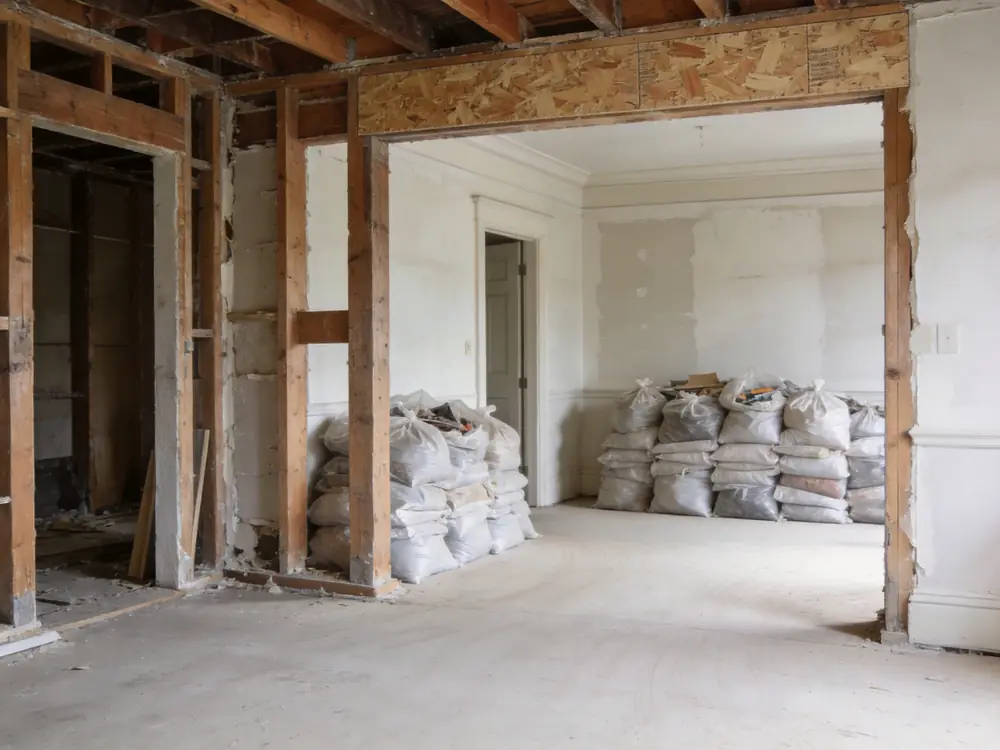
Air scrubbers are especially important in HVAC remediation. Cleaning ducts, the blower and the mold on the AC coil and drain pan knocks spores loose right in the airstream. A HEPA negative air machine connected to the duct system pulls that debris out, while scrubbers in the room around the air handler catch anything that escapes.
Can I Stay Home While Scrubbers Run?
Often, yes. With good containment and negative air, many families stay home during smaller projects, while avoiding the work area. The machines do make steady fan noise, and they may run overnight. Larger jobs or households with someone who has asthma, allergies or a weakened immune system may be better off leaving. Our guide to staying home during mold remediation covers how to decide, and anyone with health concerns should check with their doctor.
Do Home HEPA Air Purifiers Help With Mold?
A true HEPA room purifier can lower the number of spores floating in a room. That can help sensitive people feel more comfortable. But it has real limits:
- It doesn't remove mold growing on walls, wood, carpet or in HVAC equipment.
- It doesn't fix the moisture problem feeding the mold.
- Most home units are sized for one room, not a whole house.
- Spores that settle on surfaces aren't reached by the purifier.
The EPA is clear that the key to mold control is moisture control. Use a purifier as a helper, not a fix. Keeping indoor humidity below 60 percent, ideally 30 to 50 percent, does more to prevent mold than any purifier.
Scrubber vs. Home Purifier at a Glance
| Feature | Professional HEPA air scrubber | Home HEPA purifier |
|---|---|---|
| Airflow | High, sized for work areas | Lower, sized for a room |
| Negative pressure | Yes, when ducted outside containment | No |
| Use | During and after remediation | Everyday comfort |
| Removes growth on surfaces | No; paired with physical removal | No |
When to Call a Professional
If you have mold in your HVAC system or a room served by forced air, containment and HEPA filtration are what keep a cleanup from spreading. Our HVAC and air duct mold remediation service in Gettysburg uses HEPA negative air on every job and follows the IICRC S520 standard. Call (717) 420-8919, 24 hours a day.