How Homeowners Policies Treat Mold
Most homeowners policies do not list mold as a covered peril on its own. Instead, they cover sudden, accidental damage from named or open perils, and then address mold through exclusions and limits. In practice, the insurer asks two questions:
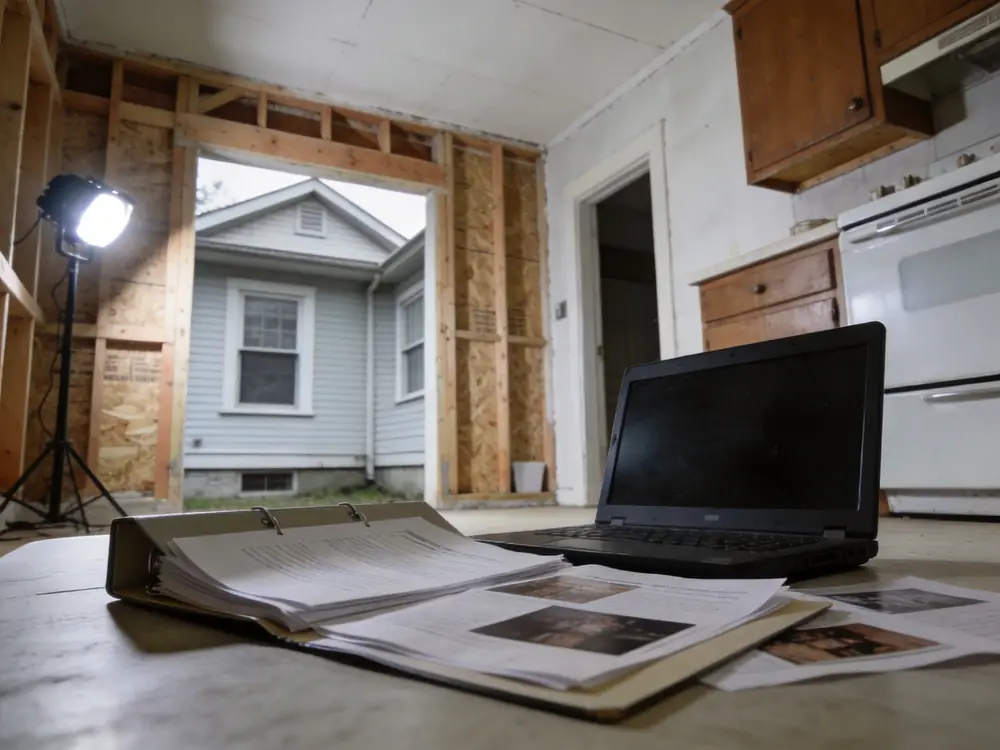
Adjusters ask for photographs, moisture logs and a line-item scope. A local Gettysburg mold remediation crew documents all three as the work happens, which is far easier than reconstructing it later.
- What caused the water? Was it a covered event, like a burst pipe or storm damage to the roof?
- Was it sudden, and did you act promptly? Or did the water leak slowly over weeks or months?
If the water event is covered and you took reasonable steps to limit the damage, mold resulting from it may be covered, often up to a set limit. If the water came from a gradual leak, wear and tear, or neglected maintenance, the mold is typically excluded.
Scenarios That Are Often Covered vs. Often Excluded
| Situation | Often covered? | Why |
|---|---|---|
| Pipe bursts in winter, mold found days later | Often yes | Sudden, accidental water damage, if reported promptly |
| Washing machine hose splits | Often yes | Sudden discharge of water from an appliance |
| Storm damages roof, rain gets in | Often yes | Wind or hail damage is a common covered peril |
| Slow drip under a sink for months | Often no | Gradual leak and lack of maintenance |
| Damp basement with humidity mold | Usually no | Humidity and condensation are common exclusions |
| Creek or river flooding | Usually no under homeowners | Flood is excluded; a separate flood policy may apply |
| Sewer or sump pump backup | Only with an endorsement | Often requires an added water backup rider |
These are general patterns, not guarantees. Your policy wording is what counts.
Mold Sublimits and Exclusions
Many policies include a mold or "fungi" sublimit. That means even when mold is covered, the insurer will only pay up to a certain amount for mold remediation and related testing, which may be far less than your dwelling limit. Some policies exclude mold entirely unless it results from specific causes. Others let you buy additional mold coverage through an endorsement.
Look for these terms in your policy:
- "Fungi, wet rot, dry rot or bacteria": the section where mold limits usually appear.
- "Constant or repeated seepage or leakage": language used to exclude slow leaks.
- "Water backup" or "sump discharge": usually needs an endorsement.
- "Flood" or "surface water": usually excluded under homeowners policies.
Flooding in Gettysburg and Flood Insurance
Gettysburg gets about 43 inches of precipitation a year, and remnants of tropical storms have caused major flooding in the region, including Agnes in 1972, Ivan in 2004 and Lee in 2011. Marsh Creek and Rock Creek drain the area. Standard homeowners policies generally exclude flood damage, so mold after surface flooding is usually handled, if at all, under a separate flood insurance policy. Flood policies have their own rules and limits on mold, so ask your agent how yours works.
Why Acting Fast Protects Your Claim
Most policies require you to take reasonable steps to prevent further damage after a loss. Mold can begin growing within 24 to 48 hours after materials get wet, according to the EPA. If you wait weeks to dry out a burst pipe, the insurer may argue that the mold came from the delay, not the pipe.
Right after a water event:
- Stop the water, such as shutting off the main valve.
- Take photos and video before moving anything.
- Call your insurer or agent to report the loss.
- Start drying: remove standing water, run fans and dehumidifiers, and call a professional if materials are soaked.
- Keep receipts for everything you spend on emergency protection.
Our step-by-step guide to filing a mold insurance claim walks through documentation, the adjuster visit and what to include in your paperwork.
Freeze-Thaw Winters and Burst Pipes
Central Pennsylvania's freeze-thaw winters are a common source of covered water losses. Pipes in unheated crawl spaces, additions and exterior walls can burst during a cold snap, and the leak is often found days later when mold has already started. Many older Gettysburg homes have crawl spaces under additions and plumbing on exterior walls. Keeping heat on, insulating exposed pipes and knowing where your main shutoff is can prevent both the loss and a coverage dispute.
What Insurance Usually Does Not Pay For
- Fixing the cause itself when it is wear and tear, like an old roof or a corroded pipe. The resulting damage may be covered, but the worn part often is not.
- Mold from long-term humidity, poor ventilation or condensation.
- Upgrades beyond restoring the home to its prior condition.
- Remediation done to address mold you knew about before the policy started.
Paying for Remediation When Insurance Does Not
If your mold is excluded, you still have options. Handle small surface areas under about 10 square feet yourself if the moisture is fixed, as the EPA suggests. For larger areas, get an itemized estimate so you know exactly what you are paying for. Our guide to mold remediation cost in Gettysburg lists typical local ranges: $500 to $1,500 for small areas, $1,500 to $6,000 for basements and crawl spaces, and $10,000 to $30,000 or more for whole homes.
For consumer questions about insurance in Pennsylvania, the Pennsylvania Insurance Department offers resources and complaint help. For advice about your specific claim or policy, talk with your insurer, your agent or an attorney.
When to Call a Professional
Call a professional after any water event that soaked drywall, flooring or insulation, when mold covers more than about 10 square feet, or when your insurer asks for a remediation scope. We provide itemized estimates, photos and moisture readings that you can share with your adjuster. See our full mold remediation cost guide, or call (717) 420-8919 any time.